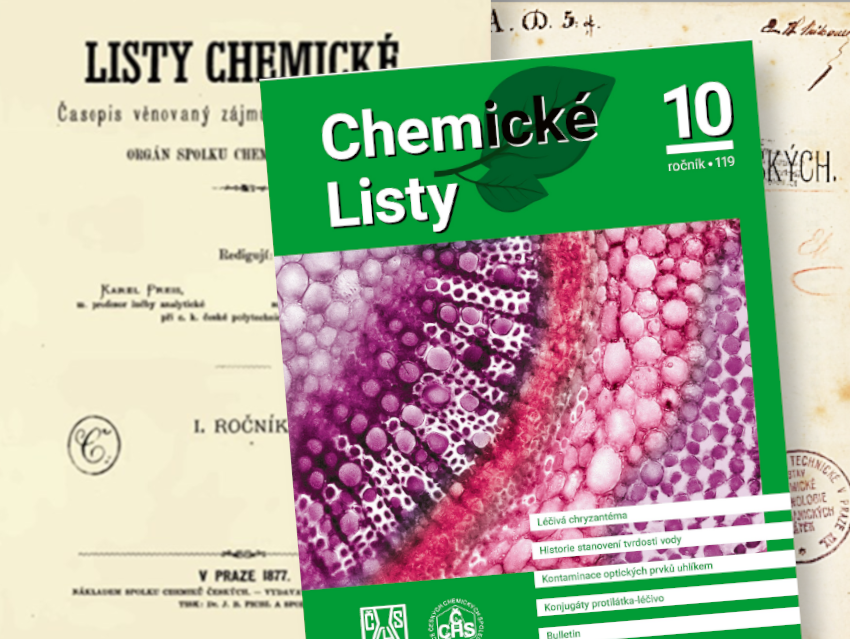
.gif)
The Most Significant Milestones from 150 Years of Chemical Letters
The journal of the Czech Chemical Society will be celebrating its 120th anniversary in 2026. It also boasts that it is the successor to the journal Listy chemické, which is celebrating its 150th anniversary. Let’s take a look at how it all began, although a lot has happened in the field of historical research since then [1].
The Beginning
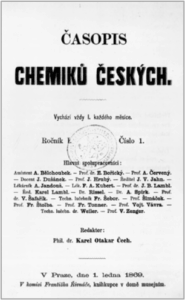 Chemické listy – Listy chemické was not the first purely chemical journal in the Czech lands, which was undoubtedly the Časopis chemiků českých (Journal of Czech Chemists) [2]. As was written in its first issue by the “Editors”, it seemed appropriate to add a chemical journal to the Czech scientific journals as early as 1868.
On January 1, 1869, the first issue of the Časopis chemiků českých was published under the commission of František Řivnáč, a bookseller in the museum house, under the editorship of Karel Otakar Čech (also known as Dragutin Otokar). Later in 1871, it was published as a supplement to the journal Průmyslník, under the editorship of František Štolba. However, the journal gradually ceased to exist after 1871.
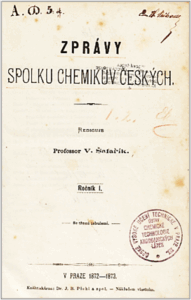 Nonetheless, the torch was not extinguished; it was picked up by another hand. As early as 1872, Vojtěch Šafařík, a member of the editorial board of the aforementioned journal Časopis chemiků českých, began publishing the Zprávy Spolku chemikův českých (Reports of the Association of Czech Chemists; printed by Dr. J. Pichl & Co.) at his own expense. Šafařík also touched on the history of Czech chemical literature in the introduction. He praised the idea of founding the Journal of Czech Chemists, saying that chemistry teachers have a difficult situation with teaching in Czech and that he hoped that it would make clear the need for publishing a regular chemical journal.
Zprávy Spolku chemikův českých was published in the years 1872–1876. The first volume contained 200 pages, and the second volume 172. In both volumes, the Association of Czech chemists gave detailed reports on their meetings, excursions, finances, library, and membership. Issues were sent to eighteen academies, scientific societies, chemical societies, and outstanding foreign chemists. Maintaining the journal by himself must have been difficult for Šafařík; the minutes show that the financing of the Reports was to be taken over by the Society [3] “from its basic assets”. The journal ended with the second year.
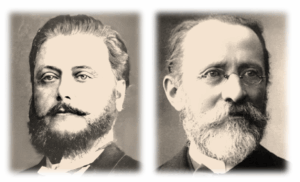
Figure 1. Karel Otakar Čech (1842–1895; left) and Vojtěch Šafařík (1829–1902; right).
The Journal of Czech Chemists was not the only medium of the chemical society at the time, because, as Hanč writes [4], “At the meeting on November 20, 1869, it was decided to establish Kritické listy (Critical Letters), periodically submitted to members in two copies, which will be reviewed by three members from the plenum. The reviewers are also to determine the program of lectures. Kritické listy are to be published every second Saturday. The first reviewers were elected: F. Farský, K. Keyř, and V. Tlamych. Mr. J. Milbauer volunteered to copy the manuscript and another member offered to do so in exchange for waiving membership fees.” Thus, Kritické listy, although in two copies, was the first traceable “paper“ medium published by the chemical society.
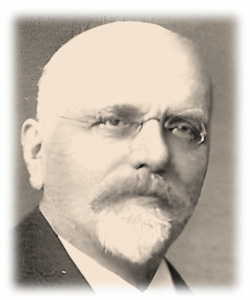
Figure 2. Karel Preis (1846–1916).
Hanč further writes: “On June 24, 1875, the association’s committee decided to publish, in addition to the Zprávy Spolku chemikův českých, edited by V. Šafařík and published quarterly in 3-page format, a new journal, Listy chemické. While the Zprávy Spolku chemikův českých should continue to have a purely scientific focus, the new journal would bring not only original works from the field of technical chemistry, but also brief and regular excerpts from foreign-language professional, primarily chemical, journals.”
“On October 1, 1876, the first issue of Listy chemické was published, and the originally single-printing-sheet monthly issues soon switched to a two-sheet format due to considerable interest and the amount of editorial material. The journal is edited by Karel Preis.”
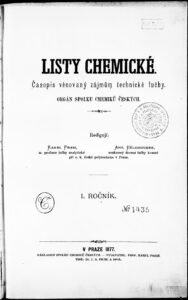 From other minutes of the 9th committee meeting of July 14, 1876, we read: “The title of the new organ is to be: »Chemické listy«. Orgán spolku chemikův českých (»Chemical papers« the organ of the Czech Chemists’ Association), dedicated to the interests of chemical technology. The price of one year has been established and is for members 2 gold coins, with postage 2.50. For non-members 4 gold coins, with postage 4.50. An insert will be attached to each issue. The first issue of the magazine will be published on October 1, 1876. Ten issues will be published annually, i.e., every month, except August and September. Due to the lack of committee members, it has been decided that the first issue will be published by the editors of Prof. Bělohoubek and Mr. Assoc. Prof. Preis. The journal is to be printed by Pichl, and the first issue will have a circulation of 300 copies.”
Why and at whose instigation “Chemické listy“ was finally published (with the title reversed—Listy chemické) a few weeks later after the 9th committee meeting, our historians have not yet been able to find out.
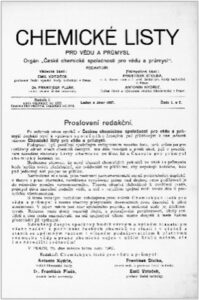 The publication of Listy chemické was, among other things, a consequence of the culmination of the Czech nation’s revivalist efforts and an important means of communication for Czech chemists. In this context, it can be noted that Karel Preis founded Listy cukrovarnické (Sugar millers Papers) in 1883, together with Listy chemické (and Listy filologické (Philological papers), these are the oldest journals still published in Czech in our country, as abstracted in the Web of Science database.
Listy chemické was published from 1877 to 1906. That year, in the field of associations, the Society for the Chemical Industry in the Kingdom of Bohemia merged with the “Association of Czech Chemists”, and from January 10, 1907, it operated as the Česká chemická společnost pro vědu a průmysl (Czech Chemical Society for Science and Industry). As a result of this change, the journal changed its name and was published under the title Chemické listy pro vědu a průmysl (Chemical Letters for Science and Industry) until 1950.
The Editors
The main editors of Listy chemické were [5]: Karel Preis (1876–1896), in collaboration with Antonín Bělohoubek (1876–1878), Karel Kruis (1879–1884) and Bohuslav Raýman (1885–1891). In the years 1892–1896 Preis edited it himself. Karel Preis also financed Listy chemické for 15 years, i.e., until 1891, mainly from his own funds, which his followers never repeated, after which full financing was transferred to the Society of Czech Chemists. After Karel Preis’s resignation, the editor was Emil Votoček (1902–1907).
After the name was changed to Chemické listy pro vědu a průmysl, Josef Hanuš (1908–1926), Otakar Webr (1927–1945) and Josef Koštíř (1946–1951) took over as editors-in-chief.
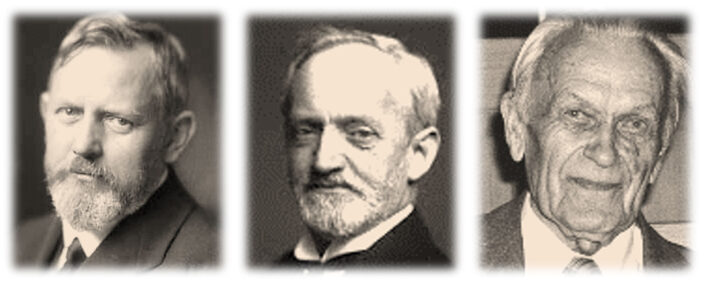
Figure 3. Emil Votoček (1872–1950; left), Josef Hanuš (1872–1955; middle), and Josef Koštíř (1907–2000; right).
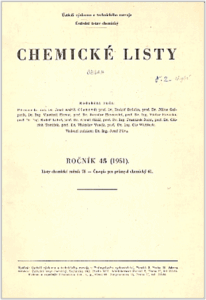 In 1951, the origin and control of social organizations and associations was newly regulated by Act No. 68/1951 Coll., which served to consolidate communist power and actually established “state supervision“ over associations that had not been dissolved at the beginning of the 1950s. As a result, on November 14, 1955, based on the above-cited act, all rights and obligations of the chemical association were transferred to the “new“ voluntary organization „Československá společnost chemická při ČSAV“ (“Czechoslovak Chemical Society at the Czechoslovak Academy of Sciences”). Thus, the publication of the journal was taken over by the Ústředí výzkumu a technického rozvoje (Central Research and Technical Development Center), and Ústřední ústav chemický (Central Institute of Chemistry) which actually means the Czechoslovak Academy of Sciences (ČSAV), which effectively “nationalized” the journal. The name of the journal was shortened to Chemické listy and the editor-in-chief was taken over by an employee of the aforementioned Central Institute of Chemistry, Josef Rudinger, who headed it for two years (1952–1954). Given the mission of the Czechoslovak Academy of Sciences, the content of Chemické listy again shifted primarily to publishing basic scientific research. It became common practice for an article to be published in Chemické listy in Czech and in the journal Collection of Czechoslovak Chemical Communication in one of the world languages. The review process at the “home“ institute was carried out by the head of every department, who authorized the publication.
After Rudinger, another employee of the institute (now the Institute of Organic Chemistry and Biochemistry of the Czechoslovak Academy of Sciences) Blahoslav Sedláček (1955–1957) took over as editor-in-chief of Chemické listy. He was followed, in 1958, by another employee of the same institute, Miloš Kraus.
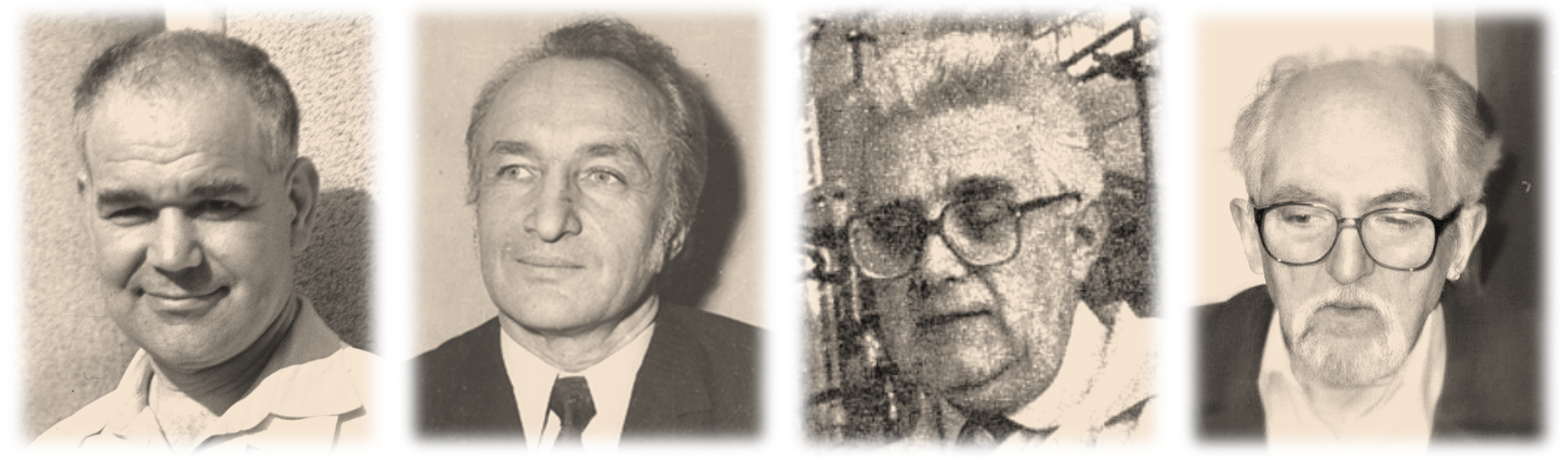
Figure 4. Josef Rudinger (1924–1975; left), Blahoslav Sedláček (1925–1999), Miloš Kraus (1927–1998), and Jiří Gut (1923–2002; right).
In 1959, the publication of the journal returned to the Czechoslovak Chemical Society, and the position of editor-in-chief was stabilized by the appointment of Jiří Gut, an employee of the aforementioned institute, who headed the editorial office for almost 40 years (1959–1996).
During this time, in 1997, the Bulletin of the Czechoslovak Chemical Society (edited by Karel Bláha), published since 1970, merged with the journal Chemické listy. In 1998, the Association of Czech Chemical Societies was founded, and Chemické listy, still published by the Czech Chemical Society, formally became an organ of the Association. Jiří Gut held the position of editor-in-chief until 1996, when he handed it over to Bohumil Kratochvíl.
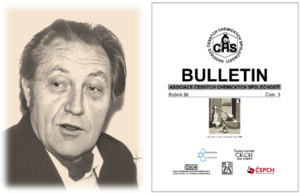
Figure 5. Karel Bláha (1947–2025) and Bulletin of the Czechoslovak Chemical Society.
 Gut was the longest-serving editor-in-chief in the history of Chemické listy (37 years). The polymath Jiří Gut demonstrated his clairvoyance and extraordinary spirit by publishing the first ever article in the world chemical literature describing porcanes [6], but also by agreeing to publish an extensive article on these “unjustly neglected, but rightly fabricated“ compounds as editor-in-chief [7]. In this context, it is necessary to mention his participation in the publication of the special thirteenth “New Year’s Eve“ issue of Chemické listí (name stands as a joke, it means Chemical leaves) in 1955 (under the pseudonym Georg J. Sure; for a modern edition of a preserved copy, see [8]), which took as its prototype a famous article from the magazine Berichte der Durstigen Chemischen Gesellschaft [9] from 1886.
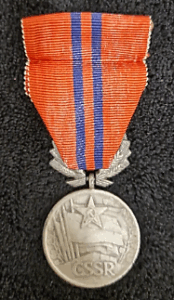
In 1976, the President of the Czechoslovak Socialist Republic awarded the journal Chemické listy the state decoration “Za zásluhy o výstavbu“ (“For Merit in Construction“) for its contribution to the development of Czechoslovak chemistry.
Bohumil Kratochvíl was the editor-in-chief from 1996 to 2011 and again from 2016 to 2020. Pavel Chuchvalec held the leading position in the editorial office from 1997 to 2015. In 2020, Vlastimil Vyskočil took over the editor-in-chief position.
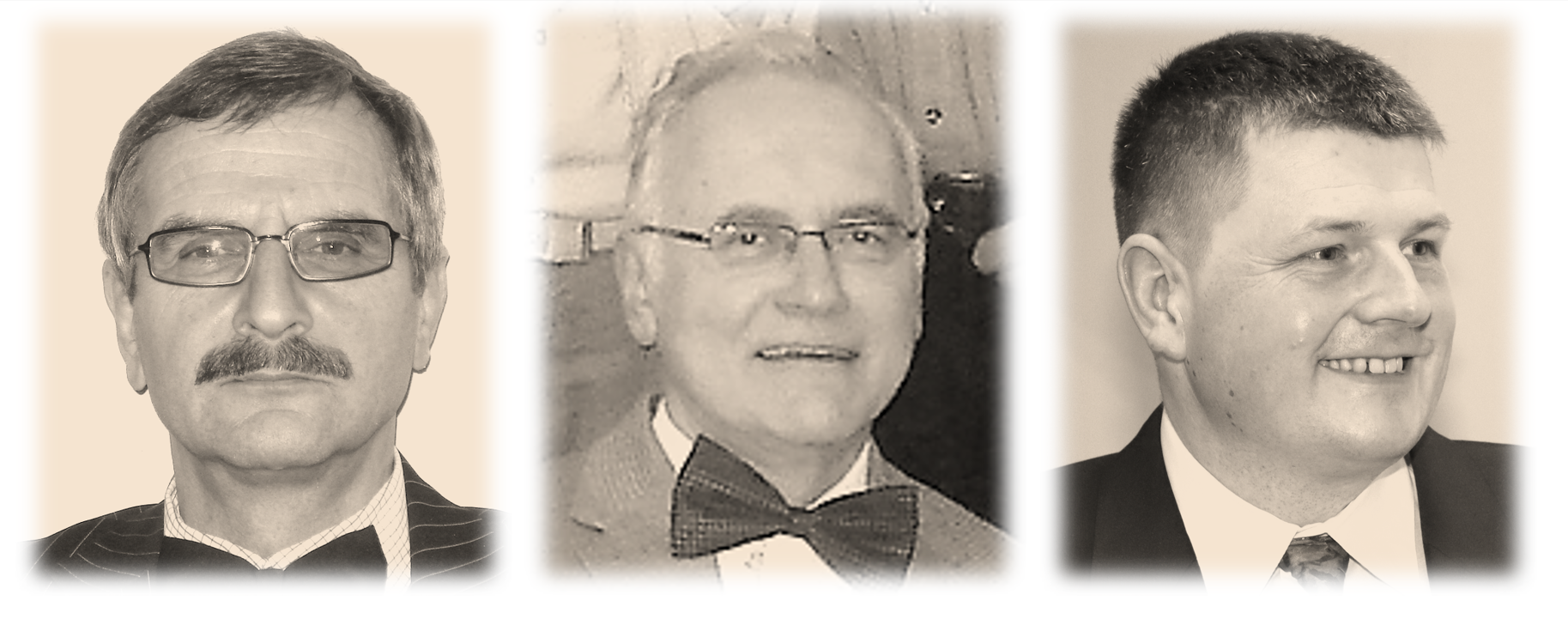
Figure X. Bohumil Kratochvíl (born1949), Pavel Chuchvalec (born 1946), and Vlastimil Vyskočil (born 1979☀?)
Publication Languge
Unlike many Czech journals, Chemické listy is published in print only in Czech, however, at the request of a number of authors, it allows the publication of an English version of an article alongside the Czech one in the online edition. The editorial board is convinced that maintaining a professional journal in Czech is extremely necessary for communication with the general public, students, and teachers, but also for the refinement of professional Czech language.
Karel Preis, an extraordinary professor of analytical chemistry, the journal’s editor and one of the founding fathers [10], wrote prophetically in 1876: “… for the Society manifests its activity primarily by taking care to provide its members with tools to enrich and multiply their knowledge by providing them with better and more important fruits, especially of newer chemical literature,… if there is a sincere will, it will certainly not fail to achieve a good result.”
Financials
 And finally, money. Publishing a professional journal in the language of a small nation has always been a financially demanding activity. From the archives of the Czech Chemical Society, we know that from the very beginning of publishing the Society’s journal, the editors and management have asked for financial contributions from entrepreneurs, foundations, schools, and state institutions. And so it is to this day; sometimes with success, sometimes with refusal, sometimes with no response at all.
The current situation of Chemické listy is a little better than 150 years ago because the publication of the journal is supported by a number of universities and entrepreneurs. In addition, the Czech Chemical Society is a member of the Chemistry Europe consortium, which publishes journals in world languages, today there are over 20 of them, which also brings some profit.
One can only hope that the policy of the Czech Chemical Society, the enthusiasm of the editors, and broad economic support will enable the magazine to exist for at least another 150 years.
References
[1] P. Holý, Ke Stému Rocníku Chemických Listu, Chem. Listy 2006, 100, 227.
[2] P. Drašar, Krátký příběh nejstaršího českého chemického časopisu a jeho pokračování, Chem. Listy 2022, 116(10), 638. https://doi.org/10.54779/chl20220638
[3] Anonymous: Proslov, Zprávy spolku chemikův českých 1, 100 (1872–1873).
[4] Oldřich Hanč, 100 let v Československé společnosti chemické, její dějiny a vývoj 1866–1966 (100 years of the Czechoslovak Chemical Society, its history and development 1866–1966), Academia, publishing house of the Czechoslovak Academy of Sciences, Prague 1966.
[5] B. Kratochvíl, P. Drašar, Šéfredaktoři Chemických listů, Chem. Listy 2021, 115, 498-505.
[6] Jiří Gut, Československá akademie věd (ČŠAV; Czechoslovak Academy of Sciences), Nový typ přírodní látky, Chemie 1957, 9, 459.
[7] M. Lebl, P. Drašar, H. Koroniak, J. Milecki, O. C. Ikonomov, NEJNOVEJSI POZNATKY V CHEMII PORKANOVYCH SLOUCENIN, Chem. Listy 1985, 79, 410.
[8] Československá akademie věd (ČŠAV; Czechoslovak Academy of Sciences), Czech Chem. Soc. Symp. Ser. 2023, 21, 41.
[9] Berichte der Durstigen Chemischen Gesellschaft, Unerhörter Jahrgang, Commissionsverlag von R. Friedlander & Sohn, Berlin, Germany, 1886. (Accessed 10.11.2025)
[10] K. Preis, Listy Chemické 1877, 1, 1.