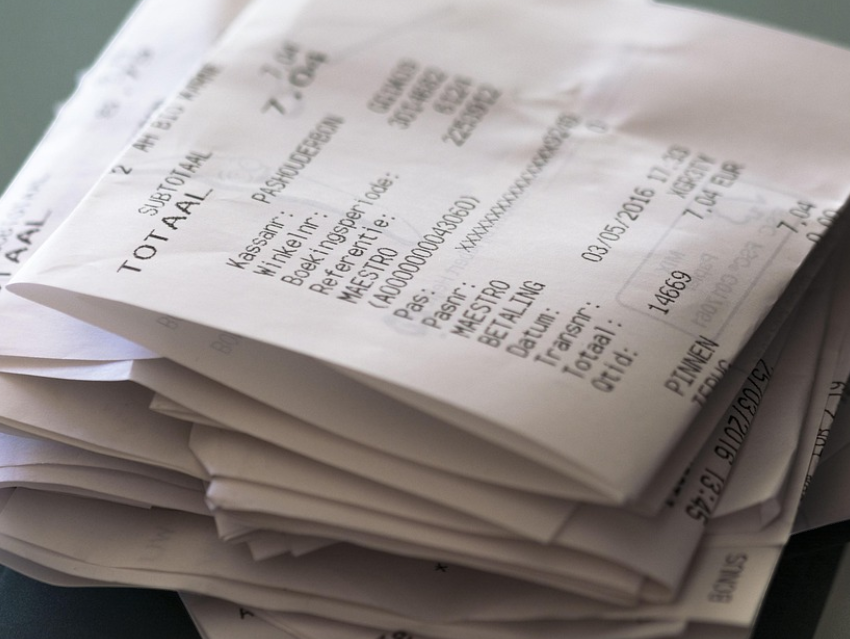
Thermal paper, widely used for receipt paper, shipping labels, tickets, etc. and frequently recycled, contains bisphenol A (BPA) and more recently bisphenol S (BPS). Both can affect living organisms by disrupting hormone signaling, and both are detected in the environment and in people who handle receipts frequently. Any less toxic alternative must react at the right temperature, stay stable during storage, mix well with other coating ingredients, and avoid background discoloration, and the paper must be stable, printable, and cost-effective.
Jeremy Luterbacher, Harm-Anton Klok, and colleagues, École polytechnique fédérale de Lausanne (EPFL), Zurich, Switzerland, have developed a thermal paper coating that replaces bisphenols with lignin and a sugar-derived sensitizer. The system uses light fractions of lignin as an inert matrix combined with diformylxylose from xylan, which melts and undergoes a color change upon heating, enabling thermal printing without petroleum-based developers.
Functionalized lignin polymers act as the developer in place of bisphenols. These are produced by sequential aldehyde‑assisted fractionation to yield light‑colored lignin with reduced chromophores, making it suitable for thermal printing without dark background interference. The lignin retains phenolic groups that facilitate the heat‑activated color reaction. Diformylxylose (DFX) serves as the sensitizer. It is derived from xylan, a common plant cell‑wall sugar. DFX melts at printing temperatures to promote interaction between dye and lignin developer, enabling the thermal print reaction.
Tests in commercial thermal printers produced clear, stable images with color densities comparable to conventional and BPA-based thermal papers, while showing improved resistance to fading under light exposure and long-term storage, EPFL reports.
The researchers state that the lignin–sugar coating is compatible with recycling streams and avoids chemicals of toxicological concern, positioning it as a safer and more sustainable alternative for receipt paper.
- Sustainable thermal paper formulation using lignocellulosic biomass fractions
Tom Nelis, Manon Rolland, Claire L. Bourmaud, Etiënne L. M. Vermeirssen, Ghezae Tekleab, Harm-Anton Klok, Jeremy S. Luterbacher
Science Advances 2026.
https://doi.org/10.1126/sciadv.adw9912
Also of Interest
The video explains how printing of parking tickets and receipts works
Printing of parking tickets and receipts has to be easy, reliable, cheap, material-efficient