Lutz Ackermann and colleagues have introduced a new class of chiral oxazoline ureas as κ²-N,O-preligands for enantioselective transition metal catalysis
Authors discuss their recent research article
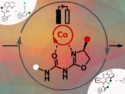
Electrochemical Co-Catalyzed C─H Activation for Enantioselective Formation of Indoles With Two Different Chiral C─N Axes
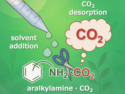
CO₂ Release from Aralkylamine–CO₂ Complexes at Room Temperature
F. Inagaki and R. Murakami discuss a recent study demonstrating that CO₂ can be spontaneously released from aralkylamine–CO₂ complexes, representing a promising advancement in CO₂ capture technology
C-Scorpionate Complexes Catalyze Nitroarene Reduction for the First Time
Luísa Martins, Portugal, discusses a recently published study exploring the effects of catalysts, solvents, and reducing agents on the reaction kinetics of nitroarene reduction
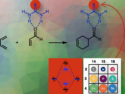
Unorthodox Catalysts for Diels-Alder Reactions
E. H. Tiekink, R. Verdijk, T. A. Hamlin, F. M. Bickelhaupt used quantum chemistry to show that hydrogen-bonding organocatalysts speed up the Diels–Alder reaction
New Quinoline Compounds Target Bacterial Energy Production
Ryan Steed discusses whether certain quinoline-based compounds can block the energy system of important antibiotic-resistant pathogens
![First Heterodinuclear Transition Metal Carbonyl Cation [MnFe(CO)10]+](https://www.chemistryviews.org/wp-content/uploads/2025/03/202503_First-Heterodinuclear-Transition-Metal-Carbonyl-Cation_PreviewA-125x94.png)
First Heterodinuclear Transition Metal Carbonyl Cation [MnFe(CO)10]+
Malte Sellin and Ingo Krossing discuss the synthesis, characterization, and bonding of the heterodinuclear cation [MnFe(CO)10]+, along with the preparation of the isoelectronic anion [CrMn(CO)10]−
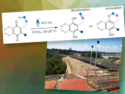
Making the Photochemistry of Quinones More Predictable and User-Friendly
Martin Kotora, Charles University, Praha, discusses his work on blue-light-induced photorearrangement of quinones
Enhanced Battery Modeling: Improving Charge and Lifetime Predictions
Limei Jin and Christoph Scheurer discuss their advanced method to enhance electrochemical impedance spectroscopy to improve the accuracy of estimating battery charge levels and aging over time
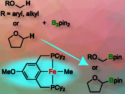
Selective C(sp³)-H Borylation of Methoxy Groups via Iron Complexes
Ken Sakata and Yoshiaki Nishibayashi from Japan, found new iron complexes to efficiently catalyze selective C(sp³)-H borylation of methoxy groups in aryl and alkyl methyl ethers
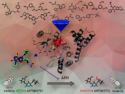
Overcoming Resistance to Aminoglycoside Antibiotics in Enterococcus
Corinne Lionne and Elise Kaplan from Montpellier, France, discuss a new family of inhibitors they have discovered that reverse aminoglycoside resistance in Enterococcus strain