Soji Shimizu and colleagues, Kyushu University, Fukuoka, Japan, have developed a high-yield method to synthesize 5,15-dioxaporphyrin (DOP), a stable 20π antiaromatic molecule, on a larger scale by adjusting concentrations, reagents, reaction time, and solvents.
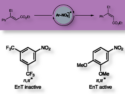
The original synthesis of DOP involves dissolving a nickel α,α′-dibromodipyrrin complex and sodium hydride in DMSO/1,4-dioxane at high temperature, enabling the nucleophilic attack of α-benzaldoxime, elimination of benzonitrile, and intramolecular ether formation through a nickel-centered conformational change from tetrahedral to square planar geometry. The new method used DMF and THF at 77–79 °C.
The new method enabled the synthesis of DOPs with less hindered meso-substituents and metals beyond Ni and Cu, which were low-yielding or inaccessible via the original approach. Yields for aryl-substituted DOPs improved.
The researchers also created, for the first time, a palladium complex of DOP, though first in low yield (<1%). Using 4-fluorobenzaldehyde oxime instead of α-benzaldoxime improved yields to 15% for Pd.
Easier synthesis of DOP opens the door to studying antiaromatic compounds and their unique electronic properties, which could be useful for organic electronics and designing complex molecular architectures.
- High-Yielding, Scalable Synthesis of 5,15-Dioxaporphyrin
Taiyou Tsutsumi, Takanori Iwasaki, Soji Shimizu
J. Org. Chem. 2025
https://doi.org/10.1021/acs.joc.5c01761