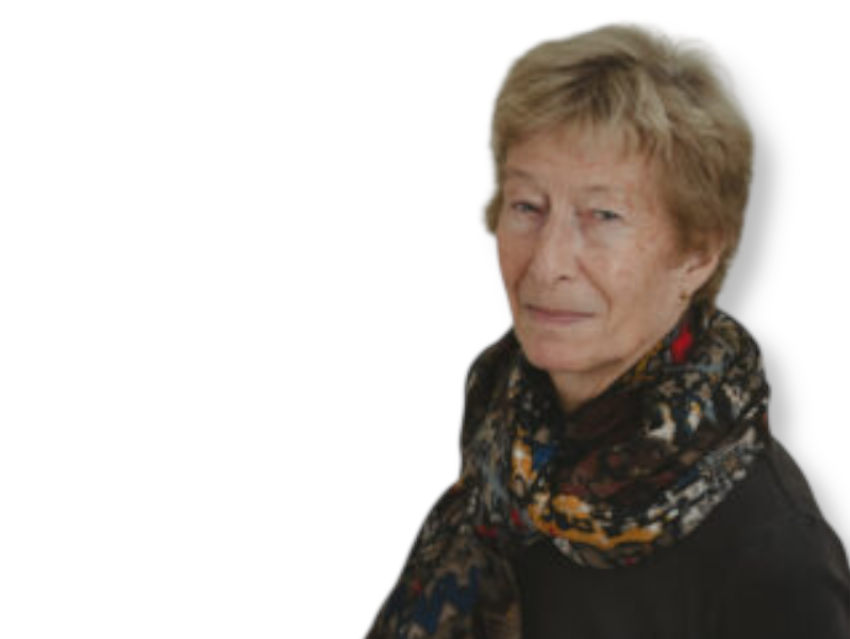
The General Assembly of the International Union of Pure and Applied Chemistry (IUPAC) has elected Mary Garson, Emerita Professor in the School of Chemistry and Molecular Biosciences at the University of Queensland, Australia, President for the 2026–2027 biennium. She succeeds Ehud Keinan, Benno Gitter and Ilana Ben Ami Professor of Chemistry, Technion, Haifa, Israel, and President of the Israel Chemical Society (ICS).
Mary Garson will assume the presidency on 1 January 2026, becoming the third woman and the second Australian to hold the role; she is widely recognized for her contributions to marine chemistry and for founding the Global Women’s Breakfast initiative.
Mary Garson, born in Rugby, England, in 1953, obtained her Ph.D. in organic chemistry from the University of Cambridge, UK, in 1977. She was awarded a Royal Society postdoctoral fellowship following her Ph.D., undertaking research in Rome, Italy, from 1977 to 1978, and subsequently continued her research at New Hall, University of Cambridge, on a college research fellowship from 1978 to 1981. From 1981 to 1983, she worked as a medicinal chemist at Smith Kline and French Research Ltd, Welwyn Garden City, UK.
Mary Garson was awarded a Queen Elizabeth II Research Fellowship at James Cook University, Townsville, Queensland, Australia, from 1983 to 1986, after which she took a teaching and research position as the first female academic in chemistry at the University of Wollongong, New South Wales, Australia. She moved to the University of Queensland, Brisbane, Australia, as a lecturer in 1990, was promoted to Senior Lecturer in 1992 and Reader in 1998, and to Professor in the School of Chemistry and Molecular Biosciences in 2006. She served as Deputy Head of the School from 2005 to 2009 and has held the title of Emeritus Professor of Chemistry at the University of Queensland since 2021.
Among her many honors, she was awarded the 2013 Distinguished Woman in Chemistry or Chemical Engineering Award of the International Union of Pure and Applied Chemistry (IUPAC), the 2017 inaugural Margaret Sheil Women in Chemistry Leadership Award of the Royal Australian Chemical Institute (RACI), and has been recognized through election as a Destinguished Fellow of the Royal Australian Chemical Institute and Fellow of the Australian Academy of Science. She is a Member of the Order of Australia (AM) in the Australia Day Honours for “significant service to education, particularly to organic chemistry, and as an advocate for women in science.
Her research examined the chemistry and bioactivity of secondary metabolites from marine and terrestrial sources, focusing on sponge terpene biosynthesis, sponge–nudibranch interactions, marine microbial metabolites, and medicinal plants in collaboration with South East Asian researchers.
Selected Publications
- Jeanaflor Crystal T. Concepcion, Sothea Ouk, Arthur Riedel, Mariafe Calingacion, Dule Zhao, Makara Ouk, Mary J. Garson, Melissa A. Fitzgerald, Quality evaluation, fatty acid analysis and untargeted profiling of volatiles in Cambodian rice, Food Chemistry 2018, 240, 1014-1021. https://doi.org/10.1016/j.foodchem.2017.08.019
- Giuseppe Giordano, Marianna Carbone, Maria Letizia Ciavatta, Eleonora Silvano, Margherita Gavagnin, Mary J. Garson, Karen L. Cheney, I Wayan Mudianta, Giovanni Fulvio Russo, Guido Villani, Laura Magliozzi, Gianluca Polese, Christian Zidorn, Adele Cutignano, Angelo Fontana, Michael T. Ghiselin, Ernesto Mollo, Volatile secondary metabolites as aposematic olfactory signals and defensive weapons in aquatic environments, PNAS 2017, 114 (13), 3451-3456. https://doi.org/10.1073/pnas.1614655114
- Karen L. Cheney, Andrew White, I. Wayan Mudianta, Anne E. Winters, Michelle Quezada, Robert J. Capon, Ernesto Mollo, Mary J. Garson, Choose Your Weaponry: Selective Storage of a Single Toxic Compound, Latrunculin A, by Closely Related Nudibranch Molluscs, PLOS One 2016. https://doi.org/10.1371/journal.pone.0145134
- Attila Mándi, I. Wayan Mudianta, Tibor Kurtán, Mary J. Garson, Absolute Configuration and Conformational Study of Psammaplysins A and B from the Balinese Marine Sponge Aplysinella strongylata, J. Nat. Prod. 2015, 78, 8, 2051–2056, https://doi.org/10.1021/acs.jnatprod.5b00369
- David M. Pinkerton, Martin G. Banwell, Mary J. Garson, Naresh Kumar, Manoel Odorico de Moraes, Bruno C. Cavalcanti, Francisco W. A. Barros, Cláudia Pessoa, Antimicrobial and Cytotoxic Activities of Synthetically Derived Tambjamines C and E – J, BE-18591, and a Related Alkaloid from the Marine Bacterium Pseudoalteromonas tunicata, Chemistry & Biodiversity 2010. https://doi.org/10.1002/cbdv.201000030
- Wimolpun Rungprom, Eric R.O. Siwu, Lynette K. Lambert, Chutiwan Dechsakulwatana, Michael C. Barden, Udom Kokpol, Joanne T. Blanchfield, Masaki Kita, Mary J. Garson, Cyclic tetrapeptides from marine bacteria associated with the seaweed Diginea sp. and the sponge Halisarca ectofibrosa, Tetrahedron 2008, 64, 14, 3147-3152. https://doi.org/10.1016/j.tet.2008.01.089
- Rudiyansyah, Mary J. Garson, Secondary Metabolites from the Wood Bark of Durio zibethinus and Durio kutejensis, J. Nat. Prod. 2006, 69, 8, 1218–1221. https://doi.org/10.1021/np050553t
Also of Interest
- Interview: IUPAC’s 100-Year Anniversary,
Vera Koester, Javier García-Martínez,
ChemistryView 2017.
https://doi.org/10.1002/chemv.201700071 - List of IUPAC Presidents on Wikipedia