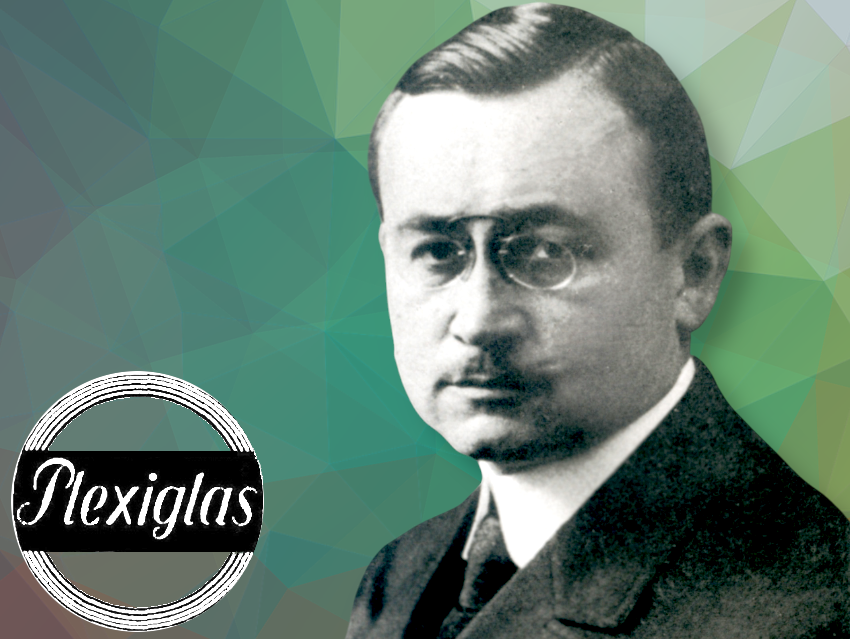
Otto Karl Julius Röhm was born on March 14, 1876 in Öhringen, in the Kingdom of Württemberg, Germany.
A trained pharmacist who went on to study chemistry, he researched and developed a multitude of products and applications with tremendous courage and innovative spirit. Many of these products and applications still form the foundation of Röhm GmbH’s success around the world to this very day.
A Challenging Apprenticeship
Otto Röhm’s mother Julie died when Otto was eight years old. He lost his father Gustav, a court notary based in Blaubeuren (Württemberg), at the age of 17. He had three brothers: Hermann, Gustav, and Alfred. Otto’s ancestors included bailiffs, judges, and schoolmasters, not to mention craftsmen and farmers.
After completing his secondary education, Otto began an apprenticeship with pharmacist Carl Josenhans in Blaubeuren on October 1, 1891. His years as an apprentice were challenging. He worked daily from 7 a.m. to 10 p.m. in the pharmacy. His personal time consisted of one free afternoon per week and every other Sunday, plus one hour each day to eat his lunch and dinner. In 1894, Otto Röhm passed his examination to qualify as a pharmacist’s assistant.
Formative Encounters
After passing his professional licensing examination to become a pharmacist in Stuttgart in 1899, Otto Röhm studied chemistry at the University of Tübingen, where he earned his Ph.D. in 1901. He was motivated to study chemistry by his teacher and researcher Hans Freiherr von Pechmann (1850–1902; see Fig. 1), who also provided young Otto with the topic for his Ph.D. thesis: “Polymerization Products of Acrylic Acid”.

Figure 1. Portraits of Hans Freiherr von Pechmann (1850–1902, left) and Eduard Buchner (1860–1917, right).
It was through Mr. Pechmann that Otto Röhm met Eduard Buchner (1860–1917; see Fig. 1), whose research into biochemical processes – that Mr. Buchner received the Nobel Prize in Chemistry for in 1907 – would go on to influence Otto Röhm’s work. He later described Mr. Buchner’s teachings as “the scientific foundation for the development of Röhm & Haas in the enzyme field”.
A Pioneer With an Inventor’s Spirit
Dr. Röhm initially turned his attention to tanning. He was the first chemist to recognize the effectiveness of enzymes from animal pancreases for the tanning of hides. With his novel bating process for the leather industry that was based on this discovery, he revolutionized existing techniques in the field.
To commercialize the new process, Otto founded Röhm & Haas in Esslingen in 1907 together with businessman Otto Haas, and the company soon enjoyed tremendous success marketing a leather bate under the brand name OROPON®. Two years later, Otto Röhm and Otto Haas relocated to Darmstadt, where they built a larger facility that enabled them to produce closer to their customers – the numerous leather manufacturers in the Rhine-Main region.
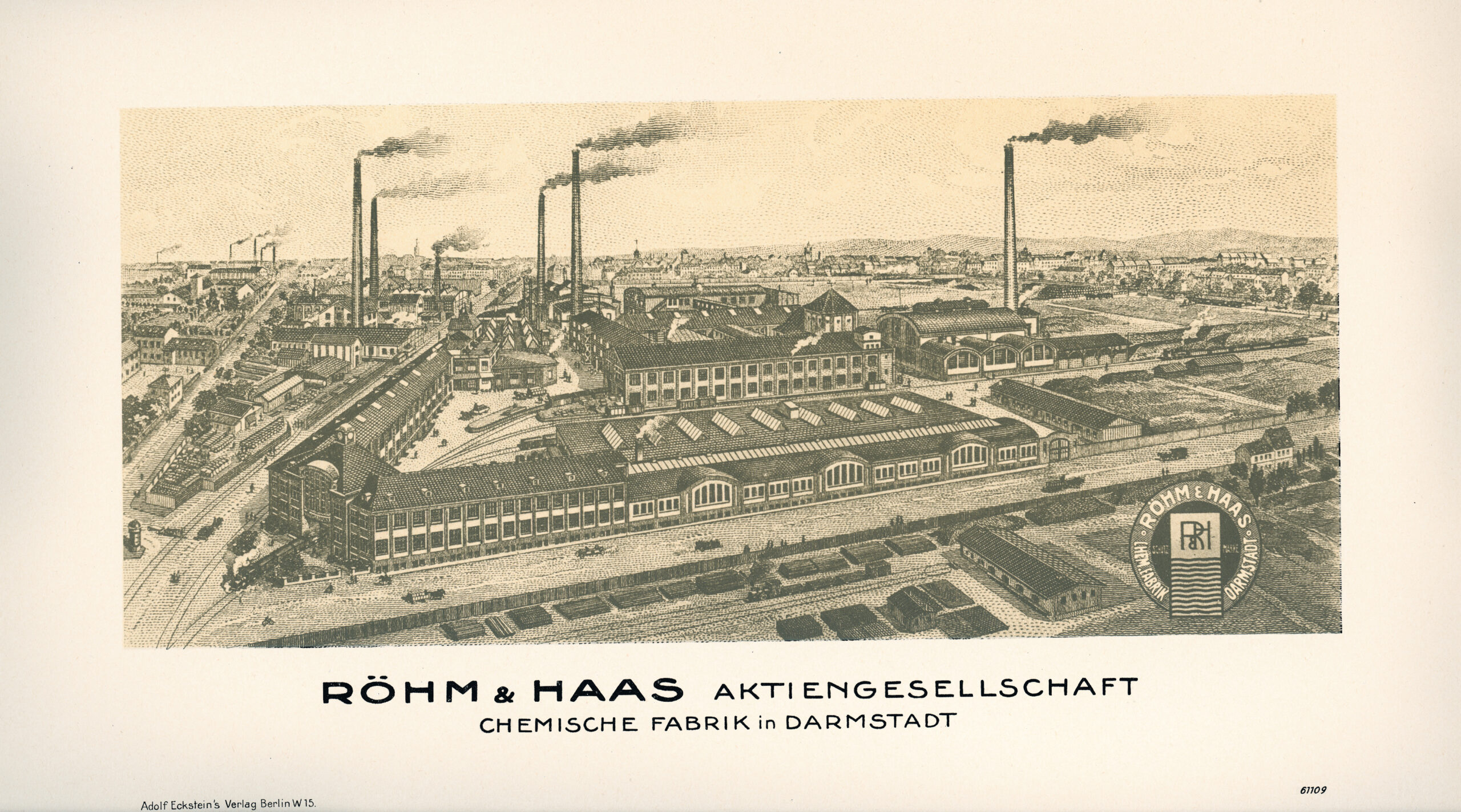
Figure 2. Röhm & Haas factory premises, 1920. (Image © Evonik Industries AG, Essen, Konzernarchiv)
Research into enzymes also inspired further product developments, such as detergents, cosmetics, products for the textile industry, and pharmaceutical preparations for wound treatment and digestive support. Enzymes soon found use in the production of baked goods and fruit juices as well.
The thriving enzyme business enabled Otto Röhm to return to the field that he dealt with in his 1901 Ph.D. thesis: acrylate chemistry. Following initial successes in developing acrylates, Otto Röhm and his researchers turned their attention to methacrylates. They soon succeeded in polymerizing methacrylate between conventional glass panes in a controlled manner to produce polymethyl methacrylate. The result was thin acrylic glass sheets, which Dr. Röhm registered under the PLEXIGLAS® trademark in 1933.
At the 1937 Paris World Fair, the transparent and durable material won the Grand Prix and a gold medal.
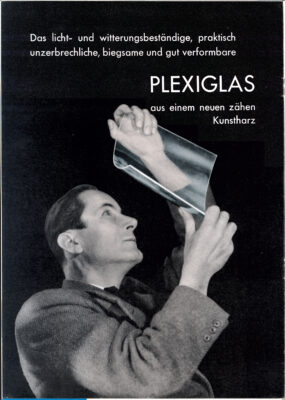
Figure 3. Brochure Plexiglas from 1935. (Image © Evonik Industries AG, Essen, Konzernarchiv)
Dr. Röhm’s goal was to expand the range of applications for PLEXIGLAS®, and the sheets were soon joined by the first granulates, which are now known as PLEXIGLAS® molding compounds. These gave rise to molded parts and preparations for dental prostheses, as well as products for the automotive, coatings, and textile industries. From the 1950s onward, the customer- and market-focused product portfolio expanded continuously.
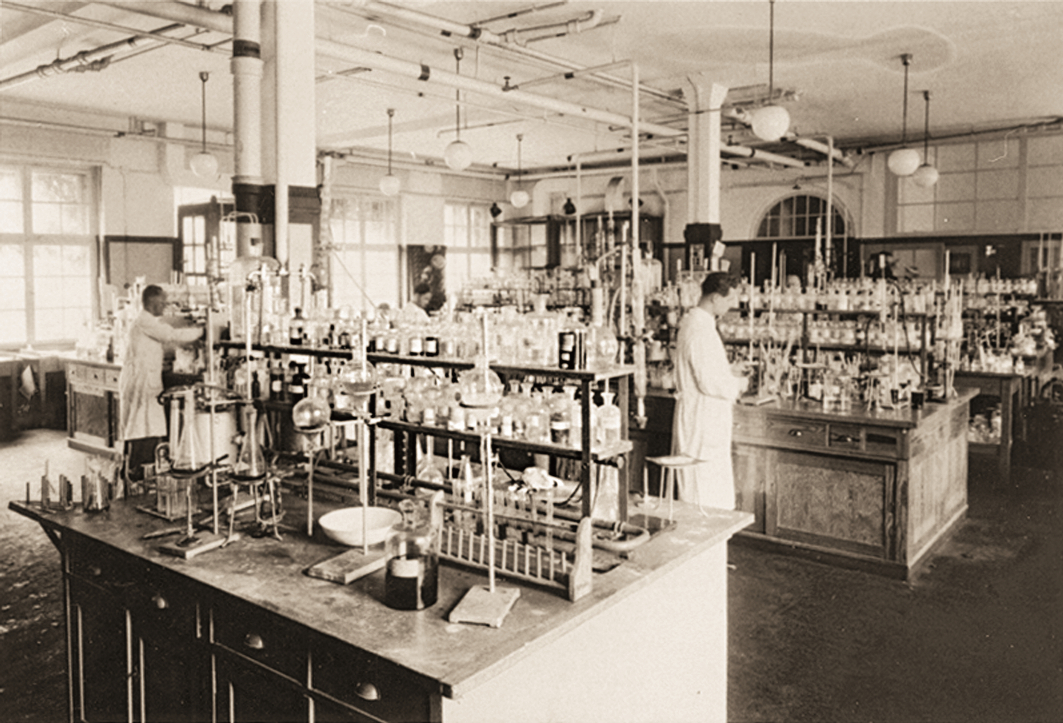
Figure 4. Plastics laboratory in 1937. (Image © Evonik Industries AG, Essen, Konzernarchiv)
So the versatile material PLEXIGLAS® has accompanied technical progress across numerous industries to this very day – from architecture and automotive engineering, to industrial design and medical technology, and many other fields too.
“Otto Röhm’s courage and pioneering spirit are an inspiration to us all,” commented Hans Bohnen, the current CEO of Röhm GmbH. “His development of PLEXIGLAS® was a milestone in the history of chemistry. This pioneering spirit is still an integral part of our DNA today.”
A Role Model for His Employees
As head of the company in Darmstadt, Otto Röhm regularly visited the laboratories and production facilities, engaging directly with the chemists and taking a keen interest in their work. One of his frequently quoted sayings was: “I don’t believe anything I haven’t tried myself.”
Dr. Röhm was a good supervisor to his employees, even though he demanded a great deal from them. He valued punctuality and frugality. It has been documented that Otto often ran to the factory to arrive punctually at the start of the working day. Employees who were also on their way to work are said to have then matched his pace and running style.
Otto had a zero tolerance approach to waste. New pencils, for example, were only issued in exchange for handing in pencil stubs. In regularly published circulars, Otto Röhm is said to have asked his employees “… to pay ever greater attention to ensuring that correspondence is kept as simple and clear as possible, without using pompous phrases. Short sentences are best.”
Otto Röhm was interested in art and culture, attended theater performances and concerts, and played the piano himself.
Innovative and Committed
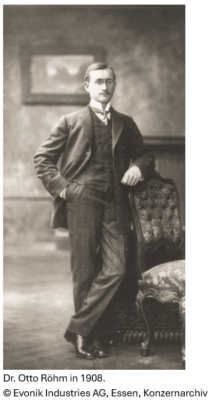 Otto Röhm is named as the inventor or co-inventor on over 70 patents. In addition to running his company, Otto shouldered responsibility as a lay commercial judge. He served on the Advisory Board of the Darmstadt Chamber of Commerce, at times as a member of the Executive Board, and was a member of specialized committees within the Association of German Engineers (today VDI – Verein Deutscher Ingenieure; Germany’s largest technical-scientific association) and the Association of German Chemists (VDCh; Verein Deutscher Chemiker), a predecessor organization of today’s German Chemical Society (GDCh; Gesellschaft deutscher Chemiker). In 1922, Otto Röhm was named Honorary Senator of the Technical University of Darmstadt.
The chemist died in Berlin in 1939. In addition to his daughter Marianne Elisabeth Julie, Otto Röhm also had a son, Otto Gustav Hermann Röhm. Otto Röhm’s grave can be found in the Old Cemetery in Darmstadt (burial site: 3 Mauer 124/125). ).
Today, streets in Darmstadt, Weiterstadt, and Worms, not to mention in his birthplace of Öhringen, are named in his memory. His legacy lives on in Röhm GmbH, which was founded in 2019 – staying true to the spirit of Otto Röhm.
With pioneering developments and leading technologies, Röhm is consistently and continually building on its founder’s success story. The company has ushered in yet another new era in the industry with its development of the LiMA process, a technology for producing methyl methacrylate (MMA). The process enables higher product yields while simultaneously reducing both energy consumption and the environmental impact. The LiMA technology has been successfully deployed at a new production facility in Bay City, TX, USA, since March 2025. The process is at the forefront of technological innovation.
Also of Interest
- Röhm GmbH, Darmstadt, Germany
A Short History of PLEXIGLAS®
The chemist Dr. Otto Röhm officially registered the brand PLEXIGLAS® in the trademark register on August 9, 1933

Collection: Significant Milestones in Chemistry: A Timeline of Influential Chemists
Starting from the early alchemists we take a journey through time to examine how each of these chemists pushed the boundaries of what is possible
Spotlight: Geheimer Medizinalrat, Dr. med. h. c., Dr. ing. h. c., Dr. phil.
Remembering Emanuel August Merck (1855 – 1923) on his 100th death anniversary

Spotlight: Ernst Schering – A Pioneer in Research and the Chemical Industry
The chemist and entrepreneur began as a pharmacist at his “Grüne Apotheke,” improved chemicals for photography, founded Schering AG, and co-founded the German Chemical Society