
ChemFoodChem Now Official Journal of EuChemS’s Food Chemistry Division
Chemistry Europe announces a strategic partnership, expresses appreciation for the Division’s support from planning through launch, and looks forward to a productive collaboration
Caffeine Content in Sports and Food Supplements
Many European food and sports supplements contain caffeine doses above safe limits, highlighting regulatory gaps and potential health risks
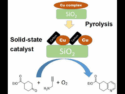
Carbon-Coated Copper Catalysts for Pyridine Synthesis
Nitrogen-doped carbon catalyzes pyridine formation without copper, enabling greener, stable, metal-free pathways

Bis(gallylene) Reactivity: Insights from Reactions with Azobenzene and (PMes)₃
Christian Hering-Junghans and Robert Kretschmer, Germany, discuss the ambident reactivity of the bis(gallylene), demonstrated by the reactions with azobenzene and the triphosphirane (PMes)₃

Black Kale Fermentation Promotes Gut Health and Reduces Cholesterol
Fermenting black kale with selected yeast increases antioxidants, supports beneficial gut bacteria, lowers cholesterol, and shows promise as an anti-inflammatory functional food
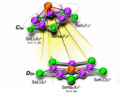
Unusual Pentacoordinate Bonding in Selenium
Gabriel Merino, Maxico, discusses whether planar hypercoordinate atoms beyond carbon could really be stabilized in heavier elements
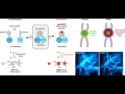
splitFAST2 Enables Nanoscale Imaging of Protein Interactions in Live Cells
A chemogenetic split fluorescent reporter, splitFAST2, allows precise, high-resolution visualization of dynamic protein–protein interactions and structural assemblies in living cells

Happy New Year 2026!
The team of ChemistryViews wishes you a peaceful, healthy, and successful New Year 2026
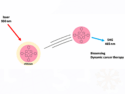
Cobalt Porphyrin–Chitosan Microspheres for Biosensing and Anticancer Therapy
Biocompatible cobalt-porphyrin–chitosan microspheres created that combine fluorescence, second-harmonic generation, and dynamic motion for potential simultaneous cancer therapy and biosensing
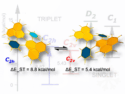
First In-Depth Characterization of Dibenzoterrylene (DBT)
DBT shows a unique conformational switch that transforms it from a closed-shell molecule to a pronounced biradical, offering design principles for quantum and spintronic materials
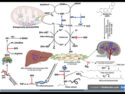
Berberine Shields Vital Organs Naturally
Berberine, a naturally occurring isoquinoline alkaloid found in plants, strengthens antioxidant defenses, reduces inflammation, and preserves healthy liver and kidney function during growth in rats
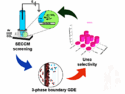
High-Throughput Design of CoCu Catalysts for Sustainable Urea Production
Researchers developed a high-throughput approach to identify optimal CoCu catalysts for sustainable urea synthesis via NO₃⁻ and CO₂ co-reduction
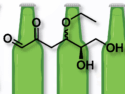
A Newly Discovered Reaction Between Ethanol And Sugars in Beer
Michael Hellwig, Germany, discusses a non-enzymatic pathway that may contribute to beer aging and flavor changes
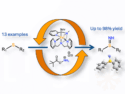
Mild, Bioinspired Iron Catalyst Enables Late-Stage Sulfilimination
Frédéric Avenier, France, discusses a simple iron-based method to attach an NH group to sulfides using an air-stable catalyst that works at room temperature
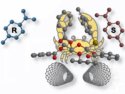
Enantioselective VOC Sensing Using Monosaccharide-Functionalized Carbon Nanotube Chemiresistors
M. Hurevich and S. Yitzchaik, Israel, address a challenge in chemical sensing: the enantioselective detection of weakly interacting volatile organic compounds (VOCs)
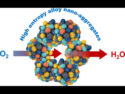
High Entropy Alloy Nanoaggregates for Oxygen Reduction
PtRhPdIrRu high-entropy alloy nanoaggregates show superior oxygen reduction performance, durability, and methanol tolerance compared to commercial Pt/C catalysts in fuel cells
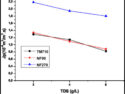
Evaluating Membrane Performance for Brackish Water Desalination under Varying Salinity in Morocco
How rising salinity affects ion transport and salt rejection in nanofiltration and reverse osmosis membranes for brackish water treatment
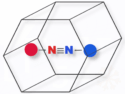
Dual Lewis Acid–Base Molecular Cages Activating N₂ via Cooperative Interactions
H. Nose, Kenya, and F. Ruipérez, Spain, discuss computational studies showing that molecular cage design can enable efficient nitrogen activation
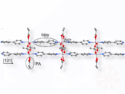
Stable Zn⁺ Species in a Ladder-Like Polymer
Researchers created air-stable monovalent zinc using a simple polymer and visible light