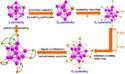
Ligand-Constrained Au₁₁ Clusters: A Novel Route to Homochirality
Achiral diphosphine ligands form strained macrocycles on an Au₁₁ kernel, breaking symmetry to directly yield a single enantiomer

The Content You Liked Best in 2025
Take a look at ChemistryViews' most viewed content published during 2025
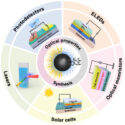
Carbon Dots: Small Materials with Big Impacts on Optoelectronic Devices
Synthesis strategies, structure–property relationships, and device applications make carbon dots promising for next-generation optoelectronics

Happy New Year 2026!
The team of ChemistryViews wishes you a peaceful, healthy, and successful New Year 2026
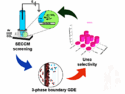
High-Throughput Design of CoCu Catalysts for Sustainable Urea Production
Researchers developed a high-throughput approach to identify optimal CoCu catalysts for sustainable urea synthesis via NO₃⁻ and CO₂ co-reduction
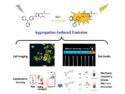
A Coumarin-Based AIE Probe for Eco-Friendly Hg²⁺ Sensing
A coumarin-based aggregation-induced emission (AIE) probe uses intramolecular conformation locking to enable sensitive, selective, and rapid Hg²⁺ detection
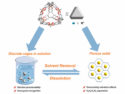
Ion–Dipole Interaction–Driven Assembly of Amphibious Silicate Cages with Host–Guest Recognition
Ion-dipole driven self-assembly yields amphibious silicate frameworks with host-guest recognition in solution and permanent porosity in the solid state

Selenoviologen Cyclophane Precision Strike Periodontitis Pathogens
A targeted photosensitizer uses a "host-guest" supramolecular strategy to selectively bind to periodontitis bacteria and, when activated by light, eliminate them while supporting tissue healing
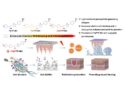
Light-Activated ONOO⁻ Generator for Targeted Biofilm Therapy
Researchers developed a light-activated molecule that releases nitric oxide and peroxynitrite to efficiently treat biofilm infections
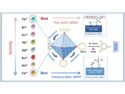
Affinity-Driven DNA Hydrolysis by Engineering Ln-MOF Nuclease Nanozymes
Lanthanide MOF nanozymes break the Lewis acidity dogma—the conventional belief that catalytic activity is primarily determined by metal ion Lewis acidity—revealing an affinity-driven strategy for highly efficient artificial nucleases

Otto Röhm: A Chemical Visionary Bridging Chemistry and Industry
Otto Röhm (1876–1939), a chemical innovator and founder of Röhm & Haas, introduced industrial enzymes and Plexiglas
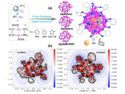
Thiolate-Templated Construction of Aromatic Silver Nanoclusters
Construction of highly stable Ag₃₄ nanoclusters via a dual-exchange strategy, exhibiting high-efficiency near-infrared electroluminescence in NIR-OLEDs
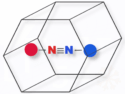
Dual Lewis Acid–Base Molecular Cages Activating N₂ via Cooperative Interactions
H. Nose, Kenya, and F. Ruipérez, Spain, discuss computational studies showing that molecular cage design can enable efficient nitrogen activation
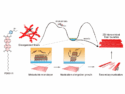
Interfacial Supramolecular Polymerization Enables 2D Hierarchical Architectures
A novel interfacial polymerization strategy allows precise formation of two-dimensional hierarchical architectures with enhanced exciton migration and sensing performance
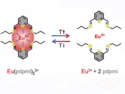
Coordination Motorized Oscillator Converts Low-Grade Thermal Energy into Usable Motion
Ximin He, USA, discusses a supramolecular polydimethylsiloxane with dynamic coordination crosslinks that enables a coordination motorized oscillator
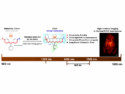
Breaking the NIR-IIx Barrier: Organic Small-Molecule Fluorophores for Deep-Tissue Imaging
Researchers develop bright, stable organic dyes that enable precise deep-tissue imaging and disease detection in the NIR-IIx spectrum
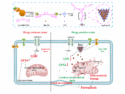
Supramolecular Nanocomplex Overcomes Drug-Resistant Liver Cancer by Inducing Dual-Site Ferroptosis
A natural nanocomplex overcomes drug resistance in liver cancer by inducing ferroptosis through a three-part mechanism that reduces glutathione in cancer cells, weakening their antioxidant defenses and causing cell death
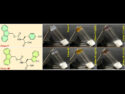
Hybrid Hydrogels for Water Purification And Drug Synthesis
Dual-action Fmoc hydrogels remove toxic p-nitrophenol and show antibacterial activity, advancing eco-friendly water purification and green synthesis

Light And Heat-Responsive Self-Healing Smart Gel System
A simple gel made from surfactants and an ionic liquid shows a UV-triggered gel-to-liquid change, reversible thermal response, and rapid self-healing