A luminescent nanoparticle assay enables ultra-sensitive detection of prostate-specific antigen for early diagnosis and recurrence monitoring
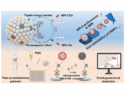
Triplet Energy Transfer Nanocomposites for Highly Sensitive Prostate-Specific Antigen Detection
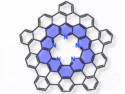
Creating and Manipulating π-Extended Quintulene on Surfaces
A curved nitrogen-doped nanocarbon synthesized that can flip shape and trap a gold atom at its center
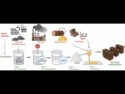
Carbon-Negative Building Material from Waste and CO₂ Capture
ETH Zürich team creates printable composite from demolition waste and biomass, capturing CO₂ and reducing the construction carbon footprint
![Diazine-Tetraphenylethylene Cyclo[6]arenes for Molecular Recognition in Solution and Aggregate States](https://www.chemistryviews.org/wp-content/uploads/2025/11/ChemistryViews-2.70171-125x94.png)
Diazine-Tetraphenylethylene Cyclo[6]arenes for Molecular Recognition in Solution and Aggregate States
1,2-diazine endo-functionalized tetraphenylethylene cyclo[6]arenes for cation binding in dilute solution and nitrophenol detection in the aggregate state
Highly Photoluminescent RGB Carbon Dots for Lighting–Energy Applications
By precise molar ratio control strategy, tricolor carbon dots with high quantum yields are prepared for integrated lighting–energy applications
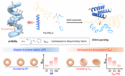
Aqueous Circularly Polarized Luminescence Regulated by α-Helix in Homopolypeptid
Chain length and self-assembly temperature of α-helix controls aqueous circularly polarized luminescence in homopolypeptide self-assembly
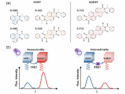
Resonance Energy Transfer Enables Chiral Recognition in the Solid State
Förster resonance energy transfer enables efficient, noncovalent chiral recognition in solid-state systems when host and guest share the same chirality

Italian Chemist and Entrepreneur Awarded the 2025 Maria Bakunin Medal
Catia Bastioli, Italy, has been awarded the Maria Bakunin Medal by the Società Chimica Italiana (SCI, Italian Chemical Society) for her outstanding work in the field of bioplastics
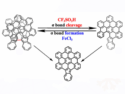
Covalent Bond Regulation in Nanographene: Precise Aggregation State Modification
Covalent bond regulation controls azulene-mediated nanographene aggregation via acids, while quenchers and temperature dictate product selectivity
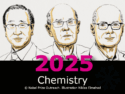
Nobel Prize in Chemistry 2025
Susumu Kitagawa (Japan), Richard Robson (Australia) and Omar M. Yaghi (USA) are awarded for the development of metal-organic frameworks (MOFs)