M. Hurevich and S. Yitzchaik, Israel, address a challenge in chemical sensing: the enantioselective detection of weakly interacting volatile organic compounds (VOCs)
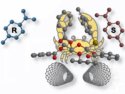
Enantioselective VOC Sensing Using Monosaccharide-Functionalized Carbon Nanotube Chemiresistors

High-Yield Synthesis of Antiaromatic 5,15-Dioxaporphyrin (DOP)
To establish a high-yielding, reproducible method, reaction conditions, including concentrations, oxime reagents, reaction time, and solvets were investigated

Jean-Marie Lehn Honored with Primo Levi Prize
Award honors significant contributions to both the chemical community and society in general

Guess the Molecule
Each day we will reveal a bit more of a molecule. Can you guess what it is 🤔❓

Otto Röhm: A Chemical Visionary Bridging Chemistry and Industry
Otto Röhm (1876–1939), a chemical innovator and founder of Röhm & Haas, introduced industrial enzymes and Plexiglas
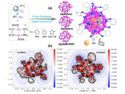
Thiolate-Templated Construction of Aromatic Silver Nanoclusters
Construction of highly stable Ag₃₄ nanoclusters via a dual-exchange strategy, exhibiting high-efficiency near-infrared electroluminescence in NIR-OLEDs
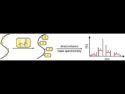
Impact of Multiple S-Palmitoylation on Peptide Behavior in Mass Spectrometry
How do multiple S-palmitoylation events influence peptide solubility, ionization, and fragmentation in mass spectrometry analysis?
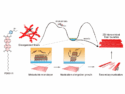
Interfacial Supramolecular Polymerization Enables 2D Hierarchical Architectures
A novel interfacial polymerization strategy allows precise formation of two-dimensional hierarchical architectures with enhanced exciton migration and sensing performance
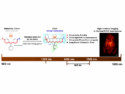
Breaking the NIR-IIx Barrier: Organic Small-Molecule Fluorophores for Deep-Tissue Imaging
Researchers develop bright, stable organic dyes that enable precise deep-tissue imaging and disease detection in the NIR-IIx spectrum
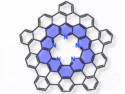
Creating and Manipulating π-Extended Quintulene on Surfaces
A curved nitrogen-doped nanocarbon synthesized that can flip shape and trap a gold atom at its center