Resistance to antibiotics has been an issue in medicine since the first doses of penicillin were prescribed. However, in recent years the number of drugs that can combat bacterial resistance has shrunk somewhat with so-called superbugs, including “methicillin-resistant” Staphylococcus aureus (MRSA), threatening public health worldwide.
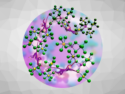
A team at the University of Liverpool, UK, working with US colleagues have shown how salicylate can be used as a molecular switch in the total synthesis of marinomycin A. This promising compound – one of a new class of bis-salicylate-containing polyene macrodiolides – is active against MRSA and vancomycin-resistant Enterococcus faecium. The development of this salicylate switch not only assists the chemists with their enantioselective synthesis, but suggests a possible mode of action of the drugs themselves based on how the salicylate moiety influences electrophilicity in the opposite way to penicillin.
- Total synthesis of marinomycin A using salicylate as a molecular switch to mediate dimerization,
P. Andrew Evans, Mu-Hua Huang, Michael J. Lawler, Sergio Maroto,
Nature Chem. 2012.
DOI: 10.1038/nchem.1330