Engineering both molecules and their environment achieves stable, temperature-switchable room-temperature phosphorescence
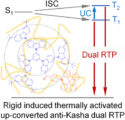
Engineering both molecules and their environment achieves stable, temperature-switchable room-temperature phosphorescence
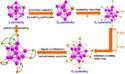
Achiral diphosphine ligands form strained macrocycles on an Au₁₁ kernel, breaking symmetry to directly yield a single enantiomer
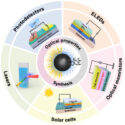
Synthesis strategies, structure–property relationships, and device applications make carbon dots promising for next-generation optoelectronics
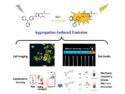
A coumarin-based aggregation-induced emission (AIE) probe uses intramolecular conformation locking to enable sensitive, selective, and rapid Hg²⁺ detection
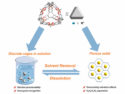
Ion-dipole driven self-assembly yields amphibious silicate frameworks with host-guest recognition in solution and permanent porosity in the solid state

A targeted photosensitizer uses a "host-guest" supramolecular strategy to selectively bind to periodontitis bacteria and, when activated by light, eliminate them while supporting tissue healing
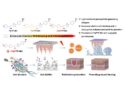
Researchers developed a light-activated molecule that releases nitric oxide and peroxynitrite to efficiently treat biofilm infections
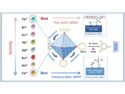
Lanthanide MOF nanozymes break the Lewis acidity dogma—the conventional belief that catalytic activity is primarily determined by metal ion Lewis acidity—revealing an affinity-driven strategy for highly efficient artificial nucleases
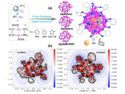
Construction of highly stable Ag₃₄ nanoclusters via a dual-exchange strategy, exhibiting high-efficiency near-infrared electroluminescence in NIR-OLEDs
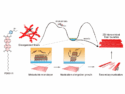
A novel interfacial polymerization strategy allows precise formation of two-dimensional hierarchical architectures with enhanced exciton migration and sensing performance