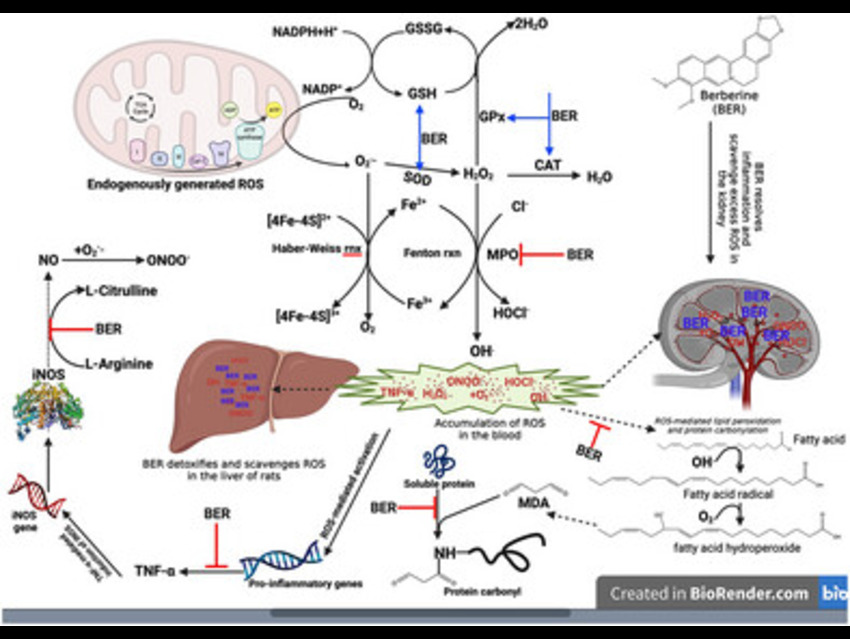
Oxidative stress and inflammation are major drivers of liver and kidney damage. Solomon Owumi, University of Ibadan, Oyo State, Nigeria, and colleagues investigated whether early-life supplementation with berberine (BER), a plant alkaloid found in Berberis vulgaris, could protect these organs during the critical transition from prepuberty to adulthood. BER, an isoquinoline alkaloid with a quaternary ammonium structure, interacts with enzymes and signaling pathways, acts as a substrate for P‑glycoprotein (which can limit absorption at very low doses), and, through its redox-active structure, scavenges reactive oxygen species while modulating inflammatory enzymes.
In this study, rats were supplemented with BER (25–200 mg/kg) from three weeks of age until adulthood. Blood and tissue samples were analyzed for biochemical markers of liver and kidney function, oxidative and inflammatory mediators, and histopathological features of hepatocytes, portal triads, glomeruli, and corpuscles. The researchers found that BER improved growth and nutrient use, suppressed pro-inflammatory enzymes and cytokines in a dose-dependent manner, and reduced markers of oxidative and inflammatory stress—including nitric oxide, tumor necrosis factor-alpha, xanthine oxidase, myeloperoxidase, malondialdehyde, reactive oxygen species, and protein carbonyls—while enhancing antioxidant defenses such as glutathione, thiols, and antioxidant enzymes.
BER reduced blood levels of urea and creatinine, indicating improved kidney function, and maintained the normal structure of liver and kidney tissues, leading to fewer tissue injuries. Computational tools (ProTox-II and SwissADME) predicted that the tested doses are safe, obey the common drug-likeness criteria known as Lipinski’s rule of five, and can cross the blood-brain barrier. The most effective doses in this study were between 50 and 100 mg per kilogram of body weight.
The novelty of this study lies in testing BER supplementation during early development rather than adulthood, demonstrating lasting organ protection. The findings show that a natural compound can improve growth, reduce inflammatory mediators, and preserve tissue structure in vital organs, suggesting potential for preventive health strategies. BER could. therefore. be developed as a safe nutraceutical to protect liver and kidney health, particularly if introduced early in life, and its ability to cross the blood-brain barrier may open possibilities for neurological applications.
- Dietary Berberine Reduced Oxido-Inflammatory Stress in Rats’ Livers and Kidneys, Supplemented from Prepuberty to Adulthood
Solomon Owumi, Bayode Oluwawibe, Harieme Agbarogi, Moses T. Otunla, Uche Arunsi, Jesutosin O. Babalola, Chioma Irozuru, Chima Amadi, Ahmad Altayyar
ChemFoodChem 2025
https://doi.org/10.1002/cfch.202500020