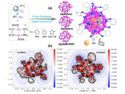
Room-temperature phosphorescence (RTP) materials are vital for applications such as anti-counterfeiting, bioimaging, and organic light-emitting diodes (OLEDs) due to their unique photophysical properties. In RTP systems, efficient intersystem crossing (ISC) from singlet to triplet states can enhance the luminescence rate of high-lying triplet states (Tₙ). This leads to anti-Kasha RTP. This phenomenon overcomes the energy gap law, enables dual-emissive properties, and is highly significant for advanced applications.
High-lying triplet emission generally follows two pathways:
- Independent T₂ emission: The high-lying triplet state (T₂) emits without relying on T₁ (low-lying triplet state), requiring a large energy gap between T₁ and T₂ and a radiative transition rate of T₂ much higher than the internal conversion rate between the two triplets.
- Thermally activated T₂ emission: T₁ populates T₂ via thermal energy, promoting T₂ emission. This pathway requires a small energy gap between T₁ and T₂, along with strong vibrational coupling or thermal equilibrium between the two states. Its advantages include relaxed material design constraints and improved temperature adaptability.
Despite these possibilities, clear molecular design strategies remain limited. Effective molecules must satisfy two key conditions: a small energy difference between T₁ and T₂ (ΔE(T₁-T₂)) and strong spin-orbit coupling (SOC) between T₁/T₂ and the ground state S₀ (SOC(T₁/ T₂, S₀)). Achieving high-energy RTP also typically requires stringent conditions (e.g., cryogenic temperatures or crystalline matrices) to stabilize Tₙ, which compromises processability and tunability. Rigid polymers, such as polymethyl methacrylate (PMMA), can stabilize triplet states by doping with phosphors, suppressing molecular motion and non-radiative decay to enable efficient RTP emission. However, these systems are still constrained by Kasha’s rule, with emission predominantly from T₁. Strategies that combine rigid polymers with high-lying triplet excitons to achieve thermally convertible anti-Kasha RTP have been rarely explored. Developing novel approaches to regulate high-energy excited-state emission is therefore an urgent need for practical organic optoelectronic materials.
Chensen Li (The Affiliated Nanjing University of Science and Technology, China) and colleagues proposed an acceptor dendronization strategy to produce RTP emitters (dTC-BPSAF) that enhance triplet splitting, generate near-degenerate triplet states with small ΔE(T₁-T₂), increase ISC channels, enhance SOC constants between T₁/T₂ and S₀, and suppress molecular motion. By integrating these RTP dendrimers into rigid polymer matrices, the researchers were able to achieve temperature-switchable dual-band anti-Kasha RTP in amorphous films.
Key innovations include:
- Molecular geometry control: Carbazole dendrons regulate triplet properties to create near-degenerate ³HLCT hybrid states (T₁/T₂, ΔE ≈ 0.2 eV) with enhanced SOC (~17 cm⁻¹).
- Energetic inversion: Thermally activated endothermic T₁→T₂ up-conversion (with a small energy barrier) drives anti-Kasha RTP emission, resulting in dual phosphorescence that violates Kasha’s rule.
- Matrix-enabled stabilization: Polymeric rigidity suppresses vibrational dissipation and exciton annihilation, stabilizing T₂ phosphorescence.
This dendron–matrix synergy strategy simultaneously engineers molecular triplet landscapes and macroscopic confinement effects, opening new avenues for efficient RTP materials in diverse applications.
- Thermally Activated Dual-Room-Temperature Phosphorescence: Triplet Up-Converted Anti-Kasha in Dendrimers Enabled by Rigid Matrix Stabilization
Chensen Li, Bo Xu, Song Zhang, Jacky W. Y. Lam, Zheng Zhao, Ben Zhong Tang
Aggregate 2025
https://doi.org/10.1002/agt2.70200