Complete, But Not Finished
Non-chemists, and perhaps a few chemists, might have assumed that once all the holes in Mendeleev’s Periodic Table were filled with modern discoveries and the lanthanides and actinides added, that the Table was forever immutable, a stone tablet to adorn high school chemistry lab walls, textbooks and websites unchanged forever more …
Well, they’d be very wrong, aside from the recent didacts on atomic masses and isotope ratios wrought on the elements in December 2010 by IUPAC and the official recruitment of elements 114 and 116, there are several issues that have got many chemists in a boiling reflux.
For instance, there are 3D PTs, spirals, circular tables, stepped and even fractal tables (see Fig. 1). Eric Scerri, University of California Los Angeles, USA, is developing an alternative approach to that is intuitive and might take us closer to an ultimate version. Scerri’s argument for change is based on the fact that the Periodic Table arose from the discovery of triads of atomic weights, but he thinks chemists would be better served if they were to recognize the fundamental importance of triads of atomic number instead. His new Periodic Table could be fundamentally closer to the ideal.
This is perhaps especially pertinent given that atomic mass varies according to isotope ratio (neutron count, in other words), whereas atomic number (proton count) is fixed for each element. In it, listings of electron shells follow an ordered pattern, so that the halogens form the first column on the left, topped by hydrogen, the noble gases are the second column, topped by helium. The alkali metals and the alkaline earth metals follow, then the block of transition metals. The semi-metals and the non-metals then form the final four columns (see Fig. 2).
.gif)
Figure 1. Some alternative Periodic Table designs.
Positioning Helium
As if this restructuring of the groups were not controversial enough, it is the logical relocation of hydrogen and helium that stirs deep chemical emotions, even though they recreate the atomic number triads of He-Ne-Ar and H-F-Cl invisible in the conventional PT. However, not everyone is convinced by helium’s placement. US chemist Henry Bent would prefer to see helium atop beryllium in the otherwise “normal” PT layout. He argues that although helium seems to fit perfectly at the top of the noble gases its presence there breaks several of the rules.
Scerri is quite adamant that there is one true and objective periodic classification but others believe that such an ultimate PT does not exist and that our perspective inevitably distorts reality. Software engineer Melinda Green from Superliminal Software, developed a fractal PT for educational use and believes any arrangement is purely subjective. “Neither the periodicity nor any classification is intrinsic to nature,” explains Green.
Atomic number is perhaps the only intrinsic property of the elements, as suggested by Scerri too, but, adds Green, this is only fundamental by our subjective definition of the term “element” rather than it representing something ultimate about the universe as Scerri’s reasoning would suggest. “Every description requires a describer,” says Green. “Subjectivity is not just an annoyance, it is the source of all meaning.”
Art and Function
So, is the menagerie of different PTs, nothing more than an art gallery? Martyn Poliakoff thinks so. Poliakoff is a professor of chemistry at the University of Nottingham, UK, working on supercritical fluids who has gained recent fame for the Periodic Table of Videos project. His is a pragmatic perspective. “I regard the PT as a tool like a hammer and, just like other tools, you have different forms for different purposes (e.g., a claw-hammer and a mallet). There just isn’t a “right” and “wrong” form,” he told ChemistryViews. He suggests that the different forms can be useful, however. “These weird forms of the PT often serve a purpose by highlighting some aspect of the elements that one might not otherwise have noticed,” he adds.
However, Scerri is convinced there is something more fundamental to the ultimate PT. “It concerns me that scientists can express ‘relativistic’ [aesthetic] views on something as important as the Periodic Table,” he says. “It is after all the most profound and deep classification that has ever been discovered.” But Poliakoff has the last word: “In the end, I think that one should remember that Mendeleev devised the PT for a textbook to help rationalize the mass of facts in inorganic chemistry,” he adds, “For me, the PT remains a tool to help reduce the complexity, not a metaphysical truth that has a correct form yet to be discovered.”
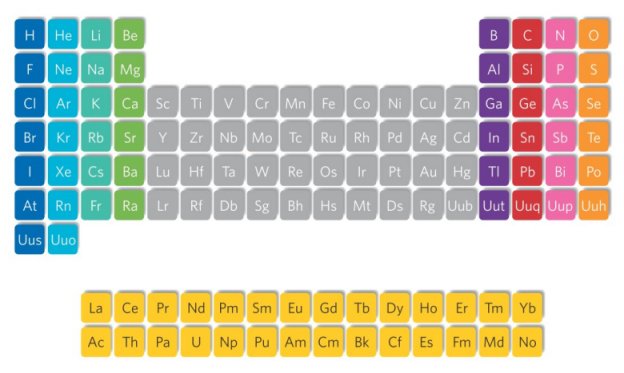
Figure 2. Scerri stuff indeed — a new, rearranged Periodic Table.
► Read on:
At Last, A Definitive Periodic Table?, David Bradley
20 July 2011 — ChemViews article and ensuing discussion has spawned a development in this field courtesy of UCLA chemistry professor E. Scerri
Also of Interest
- Database of Periodic Tables and Periodic Fractal of the Elements
- Interview with Eric Scerri
- Interview: Rebuilding the Periodic Debate — Philip Stewart
- Melinda Green’s Homepage
Alternative PT designs taken from:
- World of the Elements Elements of the World
Hans-Jürgen Quadbeck-Seeger
Wiley-VCH, Weinheim, 2007.
ISBN: 978-3-527-32065-3




Thanks for featuring my views on the periodic table David. Not sure why you give the “last word” to Martyn Poliakoff though! But seriously, I look forward to continuing this debate with others involved. all the best eric scerri
Just to clarify a point in the above article, I favor increasing the number of existing atomic number triads by one to include H (1), F(9), Cl (17). This is what led me to suggest that H should be moved from group 1 to group 17 (the halogens). The table in the above article embodies this relocation, and also places the halogens on the far left of the table in order to start at 1 in the top left corner. This step is of course not essential and I dont mind if one simply moves H to group 17 as it usually stands on the right of the table. I have published versions of both forms. On the other hand the Janet left-step table relocates He to group 2 and thereby destroys a perfectly good atomic number triad He(2), Ne (10), Ar (18). So contrary to what I wrote in the concluding chapter of my book of 2007, I no longer support the Janet style left-step table. Eric Scerri, The Periodic Table, Its Story and Its Significance, Oxford University Press, 2007. http://www.oup.com/us/catalog/general/subject/Chemistry/?view=usa&ci=9780195305739
I wonder if Melinda could explain what she sees as the advantages of her own proposed table. In particular what is supposed to be original about it? The notion of a continuous representation is of course not new. Is she aware of the tables that have been published over the years through such books as van Spronsen, Mazurs etc? The impression created by her entry on Mark Leach’s site is that she may not be. eric scerri
Besides the triads H-F-Cl, what other triads are better addressed in the “new, rearranged Periodic Table”? What are all the triads you can think of? Roy A.
Hi Roy, Another triad that to my mind settles the placement of some elements is having group 3 as Sc Y Lu and lr rather than Sc, Y, La and Ac. Y, Lu and Lr form a perfect atomic number triad in a long-form periodic table. Y, La and Ac do not. There are of course many chemical and physical arguments for making this change to group 3 but I think the atomic number triad approach makes it completely categorical. If one opts for a long-form display then having group 3 as Sc Y Lu and Lr keeps all elements in order of increasing atomic number. The other option does not. I have written about this in articles in J Chem. Ed. as well as Foundations of Chemistry and Int J Quantum Chem. and Chemistry World. If anyone is interested please write to me directly. eric scerri
Dr. Eric ,Thanks for sending me the link: Dear David Bradley. This is a debate in the bowels of the PT. The issue of triads it really is appealing, which come still from Dobereiner, and likes to laboratory chemists. (I now remember the determinations of metal cations in the qualitative analytical chemistry, when appear color changes, insoluble salts, etc. And in a defined groups, we could determine the presence of elements). The problem is that if Mendeleev devised his table “to help rationalize the mass of facts in inorganic chemistry”, it is curious that although there is no agreement in its final form, perhaps as shown in the article by David Bradley, so there is no end and that our stubbornness to look for the final Periodic Table, it is like the square the circle, I think it will be impossible to please everyone and even physicists and chemists with a mathematical model and the put the H and He, will always be an almost insoluble problem. There are now many models that search for “reduction of complexity” (as Poliakoff says) and most were studied by Van Spronsen, Mazurks, Scerri, etc. in his clasical books or have been published on the website of Mark Leach. Although it is an eclectic stance I am agrees that all models of tables “may be helpful.” Some researchers put aside the straitjacket of the triads and instead focused on an “intrinsic regularity” of the table: the duality of the periods (Charles Janet, Baca Mendoza) as pairs of sequences that proceed from of the adds sequences of quantum numbers, (as each two periods are increased an cuantic number.) The fact is that, if we consider these pairs of Periods (or Binodos) as the a sequence, we can obtained a quadratic function, a parabola, ie an exact mathematical form (Y = 4 x ^ 2). This contradicts to Melinda Green when he says that “Neither the timing nor any classification is intrinsic to nature”, I think TP is precisely the example of the frequency in nature, even more so when, by its fractal character, which Green proposed can be reorganized into a polar spiral regular and perfect. We can see in: http://www.meta-synthesis.com/webbook/35_pt/pt_database.php?PT_id=313 Perhaps this parable and the coil could reducing complexity to a minimum and be the bridge between quantum mechanics and the periodic table. Wonder you Melinda Green have not noticed that the fractality of the PT (which is not a subjective fact) is manifested by pairs of periods and obviously between these pairs of periods or Binodos, only have a similar properties. On the other hand it is true that the exact frequency in the table does not exist, it would be monotonous (like the trigonometrical functions sine or cosine), the really existing periodicity is the Periodicity in growth, and his curve is a damped function or spiral growth. So, dear David, the last word is not from Poliakoff. We will have to continue investigating and talking. Dr. Scerri Thank you for sharing this site and invite people to contribute to cultivate the science of Mendeleev. Julio Gutierrez Samanez
From a pedagogical point of view. Eric’s PT leaves a lot to be desired. It destroys the s-p-d-f block system which is very useful for determining electron configurations and orbital diagrams. Students are more likely to need that than to have the triads intact. Also, is destroys the trend in atomic radius for a period. We now have the smallest atoms at the beginning then a jump in size for the metals decreasing across to the end of the table. It also destroys the trend in metallic character across the period. I can buy into putting helium above beryllium, I often do when discussing electron configurations. However, I cannot see any really good reason to move groups 17 and 18 to the beginning of the periodic table. From a point of view of teaching chemistry and the trends in the table, triads are pointless. Trends that make sense are much more useful. John Milligan
Thanks for your comments John. I agree with you that my proposal does not work quite so well when looking for trends such as metallic character, atomic radius and so on. If it’s a question of weighing up utility against ‘truth’ I would lean on the side of truth. Your question gets at the crux of this debate. The question is whether the periodic system reflects nature as it ‘really is’ or whether it is primarily a matter of convention which is set up for our convenience. If you favor the first choice then you might not be so unhappy in losing trends such as the ones that you point out. In any case the elements form a continuous sequence as Philip Stewart likes to point out and so where exactly one chooses to begin each period is somewhat arbitrary. Nature dictates the sequence of elements and the point at which there is periodicity but not how we represent the situation on a 2D chart. That part is purely conventional. eric scerri P.S. Some of these ideas are discussed in my forthcoming ‘A Very Short Introduction to the Periodic Table’, OUP, http://www.amazon.com/Periodic-Table-Short-Introduction-Introductions/dp/0199582491/ref=sr_1_3?s=books&ie=UTF8&qid=1308095562&sr=1-3
Or if you insist on utility think of it like this. Triads may not be useful in teaching chemistry but I am proposing that they might provide THE most useful criterion for placing elements into their appropriate groups. I find it interesting that electronic configurations fail to settle the question of placement in a number of cases, e.g., H, He, La, Ac, Lu, Lr. Please also see my forthcoming artile in the UK chemical education magazine, Education in Chemistry. The title will be “Trouble at both ends of the periodic table, and in the middle too”. The last part is a reference to the debate over group 3 which I claim can be settled categorically with reference to a long-form (32 column) table and the use of atomic number triads. eric scerri
Alternative response to John Milligan’s excellent posting. John, I am not concerned about the shape of the table that one uses. Nothing hangs on the fact that, in my table that appeared in David Bradley’s article, I place groups 17 and 18 on the left-side of the table. My concern is with the placement of elements like H and He. I have published an alternative form of my preferred table in vol 85, Journal of Chemical Education, 2008. See fig 3 on page 2008. This table could be described as a modified left-step table. The point is that H is placed among the halogens once again, as dictated by the H, F, Cl triad. Another possibility which retains many of the trends that John Milligan considers to be important is to retain the common 18 column medium-long form and to simply move H to the halogen group. In other words my commitment to using triads to settle placement issues does not commit me to any particular shape for the table or indeed whether to opt for a medium-long form or a 32 column long-form table.
Eric, thank you for kind invitation to join the discussion (as you wrote “from the home of Mendeleev”). So many beautiful versions! Here in Russia new versions are also still frequent, many of them have been published in USSR in popular journals, many appearing now. Most never appeared in Van Spronsen or Mazur’s books. Recently I learned that in the Soviet Academy of Science there was a special comission, which considered (quite seriously!) every new version of periodic table. They were placed in special archive (may be one day I shall find and open it to public). I think, I have seen already one table similar to yours “rectangular” form somewhere in 1980s. I see only one it’s advantage (except better shape): when you speak about common cations with rare gas configuration (Li+ or Cl+7) you can look always at the left for a prototype. (In usual form the prototype was in the preceeding period.) Coming to “triads” as a ruling principle: I am not totally sure we need them so much, we are not in pre-Doebereiner times – Mendeleev classification already exists and proved its effectiveness in predicting eka-elements. By the way, he used for such predictions his old good short form and used for this his old (and not so bad) triads – horizontal, vertical and two diagonals. Do you novel triads have better predictive power? Actually, Mendeleev always spoke on two types of triads – those related to neighborhood of an element and on those of another type – noble metal triads in his short form. This another type of triads was both advantageous and disadvantageous, but it was comletely lost in the long form. So, make clearer use of “triads” principle. The last point is addressed to mutual creators of novel “tables”. I think the Periodic System, as an abstract object with elements and their interrelations, in mathematical sense is 4-dimensional. This is clear from 4 independent quantum numbers or from Rumer-Fock connection of H-atom model to irreducible representations of rotation of 4D-spere. So, this ideal object has specific stymmetry, and this symmetry group SO(4,2) describes 4D object. As a result, an “ideal” shape of periodic table is something in 4D. What we can do, we can only see some 3D or 2D projections of this ideal object into 3D space or 2D plane, similar as you would try to draw a hypercube on paper or make its ball-and-sticks image. Mendeleev’s old compact table was only 2D projection, good enough to make useful predictions. Spirals, cylinders, conicals surfaces or differently shaped tables are not bad or good: they are just projections…
I am interested to hear of the Soviet Academy of Science investigation into alternative forms of the periodic table and am eager to see this compilation. Please try to make it generally available Eugene. A quick comment now on triads, I believe they continue to be useful. For example, following the synthesis of some superheavy elements especially 104 and 105 it began to look like elements were not behaving as they should according to which groups they fell into. It began to look as if the periodic law had reached its limit. However when elements 106 and 107 were synthesized things returned to normal. For example bohrium, element 107 for which some chemical properties have been recorded. Measurements of volatility gave values of standard sublimation enthalpies, TcO3Cl = 49 kJ/mol, ReO3Cl = 66 kJ/mol, BhO3Cl = 89 kJ/mol Predicting the value for BhO3Cl using the triad method gives 83 kJ/mol, or an error of 6.7%. This is further evidence for Bh acting as a genuine group 7 element. Tc Re Bh and supports the notion that the periodic law continues to hold even for very high atomic numbers. Your comments on group theory and the periodic table are interesting. It would be useful to some of us here if you could provide a few references to the 4-D understanding of the periodic table. eric scerri I have a new book appearing soon, Eric Scerri, A Very Short Introduction to the Periodic Table, Oxford University Press, 2011, http://www.oup.com/us/catalog/general/subject/Chemistry/?view=usa&ci=9780199582495
I am interested in your comment on the 4-D nature of the periodic system. I think you may be correct here although the four quantum numbers represent 4 degrees of freedom and not necessarily 4 spatial dimensions. And yes I am aware of Dirac’s treatment of spin as the fourth dimension through his relativistic analysis of the H atom. But let’s assume that you are correct and that the periodic system really is a 4-D affair in some sense. Does it therefore follow that a 3-D periodic system is therefore superior to a 2-D table? I have made such arguments before although not very seriously. For example, a slice through Dufour’s Periodic Tree has the effect of aligning many more elements with valence +3 for example than the conventional 2-D tables do. What do you think Eugene? Others? eric scerri
Many of the discussants may remember my support for multidimensional periodic relations, especially with regards to numerical patterns coming from the Pascal Triangle. They are not limited to the atomic electronic systems, but can be extended as well to the nucleus. They may also be found in larger multicenter patternings, and thus have reflections in such phenomena as quasicrystallinity, base balance in bulk DNA sequences, and larger systems. I’ve already found them in data generated by people working in tabletop nuclear experiments. Interestingly Lucas numbers, particularly important in the latter, it seems, are quite special. If one takes Lucas numbers AS degrees in a 360 degree circle system, then one ALWAYS gets 2x a Fibonacci number of full cycles of 360 degrees, with a Lucas number credit or debit in degrees. Thus in such a cyclic environment, Lucas numbers regenerate Lucas numbers. I’m considering such phenomena as part of a larger fractal ‘Golden Tapestry’ which may or may not be part of the internal structure of spacetime, with possible relevance to the periodic table in n-dimensions. Jess Tauber
Can you comment on how these mathematical ideas have any consequences on the question of which periodic table should be favored? Alternatively, what are the consequences on the chemistry and physics of the elements of thinking about the periodic system in the way that you do? eric scerr
The Pascal Triangle seems to tie together all these disparate phenomena. First, from the perspective of the Janet Left-Step PT, every other alkaline earth atomic number (4,20,56,120) is identical to every other Pascal tetrahedral number. And the PT can be represented as a tetrahedron of close packed spheres (which is the basis of the buildup of form in the Pascal system). There are several different tetrahedral PT models that retain both a good amount of internal symmetry (or antisymmetry) and also fit the known quantum number l block structure. Exactly one, however, also keeps Mendeleev’s line intact as well. Next, again in the Janet table, counting leftwards from the alkaline earths using only Pascal triangular numbers, we end up on positions where quantum number ml=0. The Janet system consists of paired periods of same length, the total number of elements in such paired periods is always a square. The Pascal triangular numbers have squares from the sums of nearest neighbor triangular numbers (1,3,6,10,15,21,28,36 and so on). The differences between every other tetrahedral number are also squares. In the nucleus half the (semi)magic numbers are double tetrahedral numbers, and there are double triangular number differences between most like positions in the structure of nucleon buildup- the only exceptions being where spin-orbit coupling creates alternative paths which destroy the expected ones. Similar things happen with the electronic system in the latter part of the table. The Pascal Triangle also motives the Fibonacci sequence, as sums of sampling in straight lines across diagonals that hit numbers in every other diagonal. If one changes the outer 1’s of one side to 2’s, the Lucas numbers are generated by the same procedure. Similarly other related series which give the Golden Ratio can be gotten by changing the 1’s to other integers. In the PT, taken AS atomic numbers, the Fibonacci and related sequences don’t map arbitrarily or randomly. Up to 89 (the last Fib number within known atomic numbers), ALL Fib atomic numbers are leftmost elements in their orbital half rows, with odd Fib mapping to the left half, and even Fib to the right. Lucas numbers map, up to 18, to the rightmost elements in orbital half rows, where we have either half or completely filled orbitals. Exceptions 29 and 47 (Cu, Ag) are one position to the left of where they ‘should’ be, but have anomalous electronic configurations that shift s2,d9 to s1,d10. s1,d10 both fill the Lucas trend. Then next Lucas element, 76Os, behaves often as a the (not quite) noble gas 54Xe, with a full orbital. Here d6 pretends to be p6. The next two Fiblike series map preferentially to mid-positions within orbital rows. In the nucleus the ratio of neutrons to protons increases with higher atomic number, converging on the Golden Ratio. All these phenomena lead one right back to the Pascal Triangle relationships (which also include other important math not mentioned in the context of chemistry and physics, which many of you may have already heard of). While they don’t actually point to any ONE particular ‘best’ PT. they may still help to narrow the field of candidates. Because I’m the first to find the tetrahedral mappings to the PT, I of course favor them. But the Pascal Triangle’s diagonals go on forever- why would we want to limit ourselves to just the first few? My gut feeling tells me that they may ALL participate in structuring the PT, and that all the odd behaviors that deviate from expectation might be due to these other contributions. The trick is to figure out the pattern of such contributions. Just as Aufbau anomalies aren’t cut and dried but can be approximated as superpositions of different configurations (which change their relative importance under different conditions), it may be that the Pascal diagonal contributions shift similarly. It would be amazing, though, if this turned out to be the case. Jess Tauber
Ronald Rich and Mike Laing recently published a new periodic table which appears in the Mexican Chemistry education journal, Educacion Quimica. It’s quite elegant but the funny thing is that they say that a periodic table should have several desiderata among which is to use as little ‘ink’ as possible. However, they promptly go on to show about 20 elements in more than one place! eric scerri Eric Scerri, A Very Short Introduction to the Periodic Table, Oxford University Press, 2011, http://www.oup.com/us/catalog/general/subject/Chemistry/?view=usa&ci=9780199582495
There is another debate involving the periodic table which lies at the heart of many of the more derivative debates concerning the placement of certain elements. The deeper debate is whether the periodic system represents a ‘natural’ system or not. Such a debate between myself, a library and information scientist (Birger Hjorland) and a philosopher (John Dupre) was published in the journal “Knowledge Organization”, vol 38, p. 9-24, 2011. The latter two deny that the periodic system represents “the truth” about the world and claim that it is as much about human categories as it is about the world itself. If they are correct then I am deluding myself that each element really does have an objective best place in the table and that the table really does have an optimal form which may not yet have been discovered. It seems to me that to take a realist view of the periodic table implies that there is a fact of the matter about chemical periodicity and it is not just a matter of convenience or convention. eric scerri eric scerri
There are two views concerning how to regard the periodic table. For a realist the periodic law, meaning the fact that the properties of the elements recur every so often, is taken as a feature of Nature itself. Of course the periodic table which displays this law is a human construction but the behavior which it purports to represent is believed to be a feature of an independently existing reality. It would seem to follow, in my view, that for such a realist, there should be a fact of the matter, dictated by the way the world is, about precisely where the recurrences should occur. This would mean that the placement of say H in groups 1 or 17 is not a choice that we can make but one that is made by Nature, even if we are not yet too clear about what Nature has chosen over this question. On the other hand the folks who believe that there is a certain latitude regarding the placement of elements like H would seem to be committed to an instrumentalist view about chemical periodicity, meaning that they would have to argue that it is not Nature itself that dictates where repetitions occur but that there is a human contribution to where we regard the repetitions as occurring. These days realism is contrasted with the view called anti-realism rather than instrumentalism but for the sake of this discussion the two could be taken as being synonymous. Now I suspect that those who believe that there is a certain amount of latitude in the placement of elements like hydrogen might be surprised to learn that they are siding with anti-realism. I am thinking of chemists like Peter Atkins and Micheal Laing among many others. Eric Scerri
For myself I consider the possibility that Nature has no issue with the periodic relation as independently existing and well structured. What is lacking is human capacity to visualize, because we’ve never had to deal with such things during our evolutionary development. The fault lies not in our starstuff, but in ourselves. Jess Tauber
(The following comments are the digest of an upcoming paper. Forum: Philosophy of Classification. Martin Channon. The Stowe Table as the Definitive Periodic System. Knowledge Organization 38(2011)No.4: 321-27.) A question is raised as to which of the many periodic tables is best, if any. I would like to suggest that differences in opinion result in part from an excessively narrow focus on atoms. To answer this question, then, it might help to broaden one’s view of classification tables. With this in mind, we should first note that there are approximately ten major categories of particle phenomena, and we now have classification tables for most of these, notably elementary particles, hadrons, hadron systems (table of nuclides), galaxies (e.g., the de Vaucouleurs system, and, interestingly, “universes” (e.g., the Friedman models). Classification tables might also be useful for organic and civil phenomena (e.g., ecosystems and languages), although none seem to have been developed so far. Interactive versions of these and other tables can be seen at http://www.projectcosmology.net. The Periodic Table is simply the most famous of these classification tables; atoms are no more important than any other type of phenomena. As a start, an important thing to notice about such tables is that each would be, ideally, a type of graph. Thus the Table of Nuclides has number of protons on one axis and number of neutrons on the other. Tables for hadrons, as another example, have strangeness, charmness and isospin as parameters. It is also noteworthy that, these tables would be, again ideally, interactive and three dimensional. Such tables are more versatile than their static, two-dimensional alternatives, and the computer now makes such graphs routinely feasible. The Table of Nuclides typically has half-life as a third parameter. Color is used to present this, but that does not provide a good, quantifiable representation. Two-dimensional tables have historically had precedence over three-dimensional tables, but this is simply because of limitations to the printed page. At the risk of belaboring the obvious, we might further note that all tables, graphs, schematics and other concept presentations are purpose-related constructions (information presentation, the facilitation of analysis, etc.). Purposes are legitimately varied, and thus different tables would be best for different purposes. Perhaps the question itself should be recast in terms of which purpose is most fundamental, rather than which table is simply “best.” This might give us the best general-purpose table. Now, if the purpose concerns something such as the printed-page display of orbital filling, then the left step table is perhaps the best, as argued by Scerri. Likewise, if we wish to concern ourselves with electron configuration, then the ADOMAH or Tetrahedral Table might be best. There are some one hundred different properties for atoms, and one or more tables of elements could be based (perhaps) on each of these. But this describes rather arbitrary purposes. In contrast, there would be one purpose not subject to this criticism: the intention to produce a table that reflects fundamental parameters for the elements. But if we want to develop the table which serves the most fundamental purpose, then this would be one that reflects basic theory relating to atoms. The parameters for our graph must then be the quantum numbers, since quantum mechanics clearly specifies these as the fundamental parameters. (Physics is the most relevant discipline to this discussion, not chemistry.) Further, we must work in 3D, since there are three primary parameters. (Color can be used for additional parameters, e.g., the fourth quantum number.) If we set up the coordinate system for a 3D graph, assign the three primary quantum numbers to the axes, and plot the atoms, the result is the “Physicist’s Periodic Table,” as apparently developed by one Dr. Timmothy Stowe. And when we do this, something very interesting happens. Consider the Modern Periodic Table. This is graph-like with “group” (atoms of similar properties) on the horizontal axis and “period” (same number of electron shells) on the vertical. Notice that the various standard groups of atoms (e.g., metalloids) correspond to irregular or surgically separated sections. In the Stowe table, this completely disappears. Instead, the classes and shells fall into highly ordered levels, rings and columns. Notice, in particular, that the lanthanides and actinides are not cut out of their appropriate positions and inserted arbitrarily at the bottom of the table. These classes correspond to the outer-most rings of the fourth and fifth energy levels. In the Stowe table, Helium appears with the Alkaline Earth Metals, rather than the Noble gases. Thus this would appear, at first, to be a problem. But this is only from the perspective of chemistry. Physics uses the “filled shell” concept for one group, and Helium fits this perfectly. Keep in mind that physics provides the relevant theory, quantum mechanics. Consider, further, the representation of “blocks.” In the modern table, each is a nice neat rectangle. But each rectangle has different dimensions. Nor is there any uniformity in position for the various blocks. However, in the Stowe table, the “blocks” correspond to perfectly uniform and symmetric rings. The concept of period is redefined in the Stowe table, seemingly in a manner that reflects trends in a more uniform manner. Notice further that the Stowe table provides at least a crude representation of the historic development of atomic nuclei from the big bang, through stellar nucleosynthesis and on to explosive nucleosynthesis (reading downward in the table). Indeed, all of the real advantages of the modern table are duplicated or improved upon in the Stowe table. The modern table and the left step table seem to have no significant advantages, except for special purposes. These come at the expense of defeating more important purposes in a general purpose table. The Stowe table, then, is very likely the definitive, general purpose Periodic Table. When developed in interactive 3D, symbols to the rear of the table can be brought forward by rotating the table through by 180° (using a simple, on-screen control). Atoms for particular energy levels (shell) and groups can be isolated by use of on-screen controls. Similar controls are quite feasible for blocks. The “modern” table scrambles the fundamental criteria (quantum numbers) and, as mentioned, presents shells, blocks and classes as irregular or surgically separated sections. It is little different from the one developed by Mendeleev in 1869, i.e., prior to the advent of modern atomic theory, and would be more appropriately referred to as the classical Periodic Table. It worked well for the printed page, but it is otherwise greatly inferior to the Stowe table. Note also that the modern table is not a true graph; “group” is not a quantifiable parameter. The assigned numbers are just nomenclature. The Stowe table has not displaced its classical equivalent, but this is simply because it does not work well on the printed page, nor even in terms of static, 3D graphics. It is a good illustration of the need for scientific visualization and knowledge organization to make the transition from the printed page to the computer. Two-dimensional, printed graphics are to their interactive, three-dimensional equivalents what the slide rule is to a calculator. The shadows of the Nook and Kindle are upon us; the printed technical treatise, along with its 2D graphics, will soon be a thing of the past. All the confusion as to which is the best table arguably results from an unnoticed assumption: the expectation that the table would be on a printed page. Another element of confusion concerns the assumption that we are talking chemistry; in fact, the relevant science is most importantly basic physics. Just as biology begins with chemistry, so chemistry begins with physics. But biology is paradigmatically concerned with organisms and chemistry is paradigmatically concerned with molecules … not atoms. .
Sorry folks, paragraph separations were lost when I copied and pasted here. (If anyone wants to see the paper in its entirety, please get in touch.)
Besides ADOMAH, which uses close-packed spheres in four parallel layers with empty spacer layers between (requiring doubling up, so two elements per sphere), there are a number of symmetrical configurations that use all the spheres, one element per sphere. One can build these around several available axes- perpendicular to a face, parallel to a face (as in bisection), parallel to an edge, etc. T3’s major symmetry axis bisects the tetrahedron from the midpoint of one edge through the tet center through to the opposite, perpendicular edge’s midpoint. The T3 has ‘skew rhombi’ bent up to a tetrahedral dihedral angle along its minor axis, nested one within the other to produce ever larger full tetrahedra. A rhombus contains the same number of spheres as a square matrix, but has the advantage of close packing. The different l-blocks are introduced at increasing radius from the rhomic center s,p,d,f, with two same-length periods per rhombus. Vertices of each rhombus are where ml=0. So configured, the T3 is able to capture most inter-block periodic linkages as straight lines of spheres, as well as secondary periodicity in its bilaterality. Any periodic relation purely due to quantum considerations only is captured along the 6 axes of spheres ‘kissing’ (touching), and another 6 in between these where spheres still fall in straight lines but don’t touch. Periodic relations due to other factors don’t fare so well here. There is another version, tentatively termed the Folded Mendeleev’s Line (FML), which takes two oppositely handed (chirality-wise) T3 models, bisects them between odd and even numbered periods and then recombines them, but also has ‘switchback’ reworking within periods. This configuration has an unbroken, though severely kinked and axially rotated, chain of elements that starts near the tetrahedral center, working outwards. As new period duals are introduced, further internal ‘unfolding’ ensues which opens up the structure and allows different nesting to take place, creating ‘docking’ both internally and externally. In some ways this is highly analogous to the way protein domains operate- maybe there are more parallels to be found. As the FML exhibits refiguring due to packing and growth, it also has links to the Golden Ratio. Unfortunately it is even less print-friendly than more static models. Jess Tauber
Eric Scerri notes that our (Rich and Laing’s) wording about saving ink seems to contradict putting several elements into more than one place. We saved too much ink!, and should have explained that showing H, for example, above both Li and F, as well as C, may remind readers immediately and very succinctly of several chemical similarities, allowing for somewhat shorter verbal descriptions in the text. In any case, ink itself is of course a minor consideration.
Martin, First of all thanks for your extensive comment. You say, “Now, if the purpose concerns something such as the printed-page display of orbital filling, then the left step table is perhaps the best, as argued by Scerri. Likewise, if we wish to concern ourselves with electron configuration, then the ADOMAH or Tetrahedral Table might be best.” My question to you is what is supposed to be the difference between these two ‘purposes’. Configuration is dictated by orbital filling surely. Neither is any more fundamental. Configurations are 100% dependent upon order of filling. So what is your point here? eric scerri
Yes I realize that the “ink” statement was a ‘facon de parler’. I suggest that reminding students or chemists of the behavior of elements is a secondary consideration. Is there not a “fact of the matter” in your view about where repetition actually occurs most distinctly, most objectively? Of course such a question must be answered in terms of chemical behavior, and so on, but the primary purpose of the periodic table and science in general is as much to learn about the world, as it is to have applications, to aid students, control, in a word “utility”. This is why I think that even if a particular table might upset the sensibility of the chemist for example, this is not grounds enough to dismiss it. Just as the move from using atomic weight to using atomic number produced a real and objective step forward, we need a clear and definitive criterion to settle placement into groups (and I mean placement just once). Electronic configurations are not sufficiently clear-cut. Witness the issues over H, He, La, Ac, Lu, Lr. As you know I have suggested a more categorical criterion and one which does not cause too much travesty to chemical and physical sensibilities.
Eric, pending further thought, I would say that you have identified a flaw in my paper. This is a good example of why I wanted someone with your background to look it over before it was published (the Knowledge Organization item). I have a modest background in physics and chemistry, but a better background in 3D, scientific visualization. In fact, I have been wondering why, with only about 100 properties for atoms (or so it seems to me), there can be many more variations of the Periodic Table. What I bring to this debate is a familiarity with the (very significant) advantages of interactive, 3D scientific visualization and, apparently, a temporarily superior perspective on classification tables in general. My intention has always been to simply point to a few overlooked facts and then step aside, letting more competent people take over. Again, I emphasize, that people attempting to identify the best table are almost always thinking in terms of 2D. But even those who are exploring 3D systems are still thinking in terms of static structures. This is surely a mistake. Scientific visualization is no longer subject to these limitations. The use of interactivity (on a computer) allows 3D systems to become practical. (On paper, such systems present readability problems.) The additional use of color effectively allows 4D systems (four parameters).
Dear Martin, Thanks for the clarification. I agree with you about the need to move to 3-D and if possible higher dimensional representations. Please see my earlier comments in response to those of Eugene Babaev. I would be interested in your views on the Dufour 3-D periodic tree which has always been one of my favorite 3-D systems. It is featured in article I published in American Scientist and also Scientific American among others.
Eric, I did a quick search and trivial study on the Dufour system, but I wasn’t able to find material that explained its rational. Can you send me copies of your papers on this? I do see gaps in the tree, which suggests that it lacks the apparent perfection of Stowe’s system. More importantly, I respectfully suggests that the professionals concerned with this issue of the best PT take a step back, so to speak, in order to get a perspective on the wider issue. You don’t want “tunnel vision” about the PT. Scientists are now developing classification tables for many of the major classes of phenomena. You need to think about what the proper principles would be for this. I suggest that these tables are ideally graphs. I also suggest that the best graphs are based on fundamental parameters (e.g., quantum numbers). If you can do this in 2D, fine, but that doesn’t seem to be working out, not for atoms, not for hadrons, not for galaxies… At present, it seems to me, the rational for seeking the best tree has to do aiding students or facilitating the recognition of patterns among the atoms. These are worthy goals. But as I indicate in my paper, there is something of far greater potential importance if the Stowe table proves to be the ideal. From this we may get enhanced scientific method. It is not so much that the Stowe table does this itself. It is that the Stowe table would dramatically illustrate the potential of an aesthetic calculus. And beyond this, there is something of even greater potential. Reviewing the various classification tables (e.g., for hadrons, atomic nuclei, galaxies, “universes”), I see emerging patterns. These tables are typically 3D and shaped like the Stowe table. It is far too early to tell if this is a true pattern, but imagine this to be the case. We then have a regularity, a law-like pattern for the construction of classification tables. Wouldn’t this suggest laws of laws in science? Any such laws would be epistemic principles. We would have the emergence of scientific epistemology. Just as the other sciences have come out of “natural” philosophy, so, perhaps, epistemology is now emerging. Think about how powerful such a science would be. Its principles would impact all sciences, constraining theories, suggesting gaps in principles, implying unnoticed phenomena … (I am late for work. I will come back later to follow up on your comments relating to Eugene Babaev.)
I have not written anything very elaborate on the Dufour system but will send you the article in which I mention it anyway. Now to your main point, can you explain why you are so enamored with the Stowe table. How does it reflect quantum numbers for electrons in atoms of the elements any better than say the Janet or left-step table? I have already agreed with you about the desirability of going to higher dimensions but it would also help to tackle the separate issues that you raise. One of them seems to be that you really favor the Stowe system. Perhaps you could explain the precise advantage of Stowe over Janet, ideally in their 2D representations to begin with. eric scerri
Eric and Martin, Thank you for letting me know about this forum. I have read some of the comments and would like to introduce my own. First, regarding the Stowe’s PT. This is one of few periodic tables where primary quantum number “n” is given proper respect. In traditional periodic table this quantum number is followed only to 3rd period. In Stowe’s table each layer corresponds to the primary quantum number.However, this is where its objectivity ends. The positioning of the elements within the layers was contrived by the author and was done subjectively. The continuity with regard to the atomic numbers was compromised. That is why it should not be regarded as the Physicist’s periodic table. This is not so, regarding the Left Step Periodic table where the elements in each row are ordered with respect to the atomic numbers and each layer corresponds to n+l level. The problem is that LSPT lacks the clarity when it comes to the primary quantum number “n”. The ADOMAH periodic table, where each vertical column corresponds to primary quantum number “n”, corrected that problem. At the same time, unlike Stowe’s system, ADOMAH retained the continuity with regard to the atomic numbers. The fact that it was found to be useful for writing electron configurations was a side effect of its orderly architecture.
(Dash trios, —, indicate paragraph breaks.) Eric, I have not analyzed the Janet table with any real care, so I don’t know what the precise situation is with regard to quantum numbers. However, taking a quick look at your book (page 283), I see some indication that this table treats n and l together, rather than separately. Ideally, we conceptualize these parameters separately. My guess is that the quantum numbers reveal no real pattern in the Janet table. (The advantages of the Stowe table cannot be explained using a 2D representation; it is inherently 3D.) — I start from a consideration of classification tables in general (for natural phenomena). I ask, what would be the right principles to use in constructing such tables? Having reviewed various tables, it seems to me that the tacit consensus among theorists concerned with such tables is that one should simply set up a coordinate system, assign fundamental parameters to the axes, and plot the objects. This is what we have for the table of nuclides (number of protons, number of neutrons and half life). This is also what we have for tables of hadrons (strangeness, charmness and isospin). This use of a graph structure is almost the obvious thing to do; this is what we almost always use to present data. This is what Stowe did. I don’t favor his system simply because it produces an aesthetically pleasant result. It is primarily because he is following what I take to be the common sense principle pertaining to the development of a classification table. — Now, as to the advantages: — 1) The Stowe system represents the quantum numbers in a perfectly orderly fashion (just what we would expect from a graph). On one axis Stowe plots n (1 to 8). On other axes, he plots m (-3 to 3) and s (range?). The fourth quantum number, l, is then represented using color, and it turns out also to follow a perfectly uniform, symmetrical pattern. (The Stowe table turns out to occupy only the upper four quadrants of the coordinate system. The table of nuclides would occupy only one of the eight quadrants.) — 2.) All classes, shells and blocks now fall into highly regular configurations. The lanthanides and actinides, for example, correspond to the outermost rings of the fourth and fifth levels. (Actually, there is some minor ambiguity here, but this might have to do with disagreements as to which groups some elements belong in, e.g., helium.) — 3) The system is highly symmetrical, symmetry being of increasing importance in physics especially, but also science in general. — 4) The symmetry also allows one to specify that there are no elements of atomic number 121 or higher. (The symmetry of the table would be “broken” if there were any such atoms.) That is, the system ceases to be simply a way to organize and present information; it serves a function analogous to prediction, i.e., we will not discover any elements greater than atomic number 120 (negation, to be more precise). — 5) In combination with other considerations (especially relating to other classification tables), it suggests the possibility of meta-laws for science, i.e., scientific epistemology. This would be undoubtedly of major importance. There were various events that ushered in the explosive growth of knowledge (e.g., the formation of universities, the professionalization of science), but the advent of an enhanced methodology (especially a conscious reliance on the experiment) was, I think we agree, the primary event. Any further enhancements to method could only have a similar effect on the growth of knowledge. — 6) The system is based on a well-justified principle, the use of a graph employing fundamental parameters. — 7) It is aesthetically appealing. — You ask me to justify the Stowe table, but, Eric, you would be much better able than me to do this. I urge you to analyze it carefully. But I also urge you to start by considering what principles should be used to develop the ideal classification table. I say that this is: THE IDEAL CLASSIFICATION TABLE IS AN INTERACTIVE, 3D GRAPH BASED ON FUNDAMENTAL PARAMETERS. — Can you think of a better principle? Is there something wrong with this idea? In as far as you and your colleagues are concerned with finding the best table, the obvious place to start is by considering which principles should apply. Get that settled and you will quickly find the best table. The source of all the confusion as to which table is best results, I suggest, from a failure to first consider the proper principles for constructing classification tables in general. Ideally, we do not want a different principle for each category of phenomena; it would be better to have a single principle for atoms, elementary particles, hadrons, atomic nuclei, etc. (Occam’s razor). The Stowe table is well developed in the program, Integral Scientists Periodic Table. As I recall, this cost me about $15 some ten years ago. It would provide you with a quick way to analyze the table. — My suspicion is that if someone with your expertise were to next develop some well-justified principle for specifying the most important properties of atoms (maybe just consensus among experts), identify those properties and then analyze the Stowe table and its main alternatives in terms of these properties, you will find that the Stowe table is superior to the others. That is what would really identify this table as the best. It would also spark the development of aesthetic methodology and scientific epistemology. Do we have something more important to work on?
Greetings, Valery. I disagree that the Stowe table is contrived. The placement of elements follows the simple principle I have indicated elsewhere. Stowe did not cherry pick the placement of elements. Also, any table will compromise the continuity of atomic number (unless it is a single row 118 elements long). In the Stowe table, atomic number also follows a pattern. Where it stops at one level, it picks up at the next, starting at the center and working outward. It moves around in a circle. (Actually, it is slightly more complicated than this, but it follows a regular pattern.) In any case, atomic number is not a fundamental parameter for atoms; the quantum numbers are. There is no subjectivity here. (But now I have to reveal some of my ignorance and a possible weakness in my argument. It seems that the Stowe table only distinguishes positive and negative for spin. Does this come in integer values from -3 to +3?)
Scroll up on this same page to see a picture of the Stowe table. (Actually, this is drawn upside down.) Look in particular at the little coordinate system. (n should be directed upward.) Notice also that the fourth quantum number, l, is represented with color. It could replace spin, using color for that instead. Everything is perfectly uniform.
Thanks Martin and Valery,______Let me pick up one point of difference between you both_______Valery insists that a display of atomic number ordering is essential whereas martin thinks not because atomic number does not feature as one of the 4 quantum numbers. On this point I support Valery. A clear and uncomplicated regular increase in the display of atomic number is, I thin, essential.______Martin you might want to look into the history of the change from using atomic weight to using atomic number_______This was a decisive and fundamental step forward in the historical evolution of the PT. We should seek to capitalize on this and not render atomic number order any less fundamental.________Yes, it does not come from QM as such but that’s because it was introduced before QM began to have any impact on the PT. Nevertheless it enters into QM calculations since in solving the Schrodinger equation for any atom we must specify the number of electrons and this is equivalent to the atomic number._____ Valery, I am sorry to say I have never understood your point about separating out the n quantum number in your display although you and Philip Stewart have tried to explain it to me at various times._____Eric
I am currently taking a more careful look at the Stowe representation. The atomic number ordering is not quite as bad as Valery seems to imply.__________ After making the central part due to s orbitals it seems to move in a circular fashion. __________There is also a jump to N = 4 followed by Sc which requires jumping back down to the N = 3 level but this is inevitable if the n quantum number is being given priority as it is by using these different planes. ___________ The more ‘natural thing’ is to model the increase in n + l rather than separating out n. Since chemical periodicity reflects electronic structure, it is the n+l order that is fundamental not the increasing n order._______ So I am going back to some extent on what I said in my previous posting. _________ All this is still a work in progress of course and I am grateful for this opportunity to argue things out_____eric
There is a problem with the Stowe display____If one really tries to follow the 4 quantum numbers for each electron in successive atoms of the PT, then B has 2, 1, -1, 1/2.______followed by C which is 2, 1, 0, 1/2 and so on, with O as 2, 1, -1, 1/2 etc. This means that there are at least two kinds of mistakes in the Stowe diagram. First of all B should fall on the negative rather than the positive side of the m axis, due to the sign in the 3rd quantum number for B as I show above. Conventionally we occupy m = -1 first. More seriously however, it should be Ne rather than O that falls on the negative side of the s axis alongside the place for N. And strictly speaking the axis for s is shown the wrong way round too. These kinds of mistakes are repeated throughout the Stowe system.____Incidentally none of this is very clear on the diagram of Stowe in David’s article shown above. I am working from the far better diagram in Martin Channon’s manuscript that he sent me. Perhaps David Bradley could be persuaded to post this better version (fig 5) from Martin’s article to facilitate this discussion?_____Part of the result of this is that one needs to jump around to a greater extent in order to recover the order of increasing atomic number but as I started to say this not be a deal breaker._____ For those of you who have not looked at the details, the Stowe system manages to display the 4 dimensions by suppressing one of them, the l or second quantum numbers by using color instead of one of the three dimensions. I am more and more drawn to this system, provided the corrections can be made.________ Can I suggest that Martin might do this? Then we can start to really see the virtues, f any, over other versions such as Valery’s and the conventional LST.
Professor Scerri asked me to upload an illustration linked to his recent comments on the Stowe representation of the Periodic Table – you can find it here – http://twitpic.com/5kzwrc
If periodic system is classification system of the elements, its goal should be just that, to classify the elements, not to demonstrate element properties, or else. It means that we should look at the atoms and base the system on what they are. We know that atoms are physical systems comprising electrons and nuclei. Each electrically neutral atom is identified by atomic number that corresponds to number of proton-electron pairs. Protons are located in nucleus and electrons are located in shells surrounding the nucleus. Atomic numbers are natural numbers 1,2,3,4,5…. It is only natural to express natural numbers in a linear sequence. Expressing them in rings, for example, is not natural.____ As mentioned above, electrons do not randomly orbit nucleui, but assemble in shells. The shells are also identified by natural numbers that correspond to the quantum numbers “n”, 1,2,3,4,5….. , thanks to potential energy quantization that create potential wells around the nucleui where electrons tend to reside. We also know that there are sub-shells, also identified by natural numbers that correspond to quantum numbers “l”: 0,1,2,3 thanks to quantization of angular momentum. ______All this is very relevant information regarding the atoms that we are trying to find the best classification system for. It is puzzling why Eric does not accept the fact that identification of electron shells represented by primary quantum numbers “n” in LSPT-ADOMAH format is extremely important for such classification. (Although, he seems okay with it when it comes to Stowe diagram).____ Following empirical n+l rule of orbital filling is also extremely important, because, thanks to spectroscopy, we know that this is what happens when elements are viewed in order order of atomic number. _____Left step periodic table satisfies all, but one, requirements. It does not identifies electron shells. This problem was solved by introduction of ADOMAH PT, which can be folded into tetrahedron that is 3D representation of n+l rule (Aufbau mnemonic in 3D). ADOMAH 3D system is the same as 2D Aufbau mnemonic, built in “n” and “l” coordinates, with third dimension representing the quantum number “ml”. This will never be achieved by any Stowe-like system, because it forces elements in rings, instead of lining them up along axis “n”, axis “l” and axis “ml” . Best Regards, Valery.
Eric, Valery, I don’t think that atomic number is irrelevant. I just think the quantum numbers are more fundamental (as I am taught to believe by physics texts). Also, as you (Eric) indicate, I had suspected that atomic number was directly implied in the quantum numbers. So, it is not irrelevant, just redundant. With that said, however, it might be possible to use interactive controls to somehow highlight the pattern of increasing atomic number in the Stowe table. I will think about that. Interactivity can do surprising things. In the Integral Scientists Periodic Table, interactive controls are used to switch between the use of color for showing s, p, d, f patterns and group patterns. So, the table is, in real effect, 5-dimensional. Similar controls can be used for other things, making the table even higher-dimensional. And we still have not incorporated any changes over time (the true fourth dimension). I have been thinking about this. It seems to me that slow changes over time might be useful for the representation of something such as the historic development of atoms (big bang events through explosive nucleosynthesis). Actually, I use on-screen controls elsewhere in Project Cosmology to allow the user to vary how quickly some changing event is presented. We can, of course, use on-screen controls and time to represent more than one choice of event for time. This stuff is almost unlimited. Another point, the table of nuclides is, of course, also the table of isotopes. This DOES show atomic number in an uncomplicated fashion. — Some questions: If atomic number is keyed to some interpretation of “period,” how does the Stowe table fare in this respect? I get the impression that there are various interpretations of “period.” Which interpretation is most favored? Is this the interpretation shown in the Stowe table? It seems to me that the periods in the S table are strictly keyed to shells. Is this the best interpretation of “period”? At least this interpretation is completely rigorous and consistent.
Eric, Well, here we run into one of my limitations. I don’t understand the importance of combining n and l. I would just reiterate that it would be best to have a single principle (or single set of same) from which we derive classification tables in general. The principle in use seems to be one of assigning fundamental parameters to separate axes in a coordinate system. Also, keep in mind that this is not just some matter of practicality. Whatever principle would apply to the formation of classification tables would be an EPISTEMIC principle. Knowledge is, in the final analysis, a real, natural phenomenon, and (established) epistemic principles would have as much scientific legitimacy as the principles in any other field. (We are part of nature; anything we make, therefore, is, in the final analysis, part of nature. Civilization as a whole is literally – not metaphorically – analogous to a bird’s nest or a bee hive. The common, irreconcilable distinctions between human artifacts and natural phenomena is misplaced; there are important differences, but they are not fundamentally different.)
Language is an example of a human artifact that is treated as a natural phenomenon. Linguistics presents laws of development and structure for language (I think), and these laws have the same scientific status as laws in other disciplines. I don’t mean that they would have the same rigor as those of physics; they just treat language as, at least in effect, a natural phenomenon. Interestingly, classification tables are an extension of language. We should expect that the principles that apply to the construction of these tables will have scientific status. (I should not speak as if these comments represent established science. I have, in fact, invited a linguist, my sister, to comment on them.
Eric, You ask if I can correct the defects in the Stowe table. Yes, this would be a simple thing to do. Send me a list of the corrections you need. If you want me to move a symbol to another position, let me know where to put the one that is displaced. Also, I need to know what to put in place of the first one being moved (if any). Perhaps you can give me a complete chart of elements with all quantum numbers specified. (In your specification for Boron, 2, 1, -1, 1/2, I’m not 100% certain of the order of quantum numbers .) — I have been thinking more about my realization that the S table does not use the standard Cartesian system. It can be understood in terms of an ordinary cylindrical system (L given by radial distance, m specified awkwardly by the angular component and n corresponding to z). However, the simplest way to conceptualize it involves a modified cylindrical system that uses y and z (vertical) axes for m and n respectively and radial distance for all angles specifying the quantum number L. This should be perfectly legitimate, but I would have preferred the Cartesian arrangement. Maybe one of the combinations of quantum numbers that you keep mentioning might make that work.
Valery, I agree that the most important use of the PT is to “classify the elements,” and the Stowe table seems to do that in the most orderly fashion. First, the various groups (lanthanides, etc.) correspond to columns and rings, not the irregular and surgically separated sections of something such as the “modern” table. Second, the shells correspond to levels. Third, the “blocks” correspond to rings. — You say that “we should look at the atoms and base the system on what they are.” This is an attempt to express a principal for the construction of the PT. I agree again, we need a principle. Can you articulate your principal in a more rigorous fashion? Would you agree that it would be even better to have a principal that applies to classification tables in general, not just that for atoms. These are no more important than other particle phenomena. We are starting to develop tables for these other categories. The principal in use seems to be one involving a coordinate system based on fundamental parameters. Take a look at the tables for hadrons, atomic nuclei, galaxies and universes. This is the principal that theorists are apparently following. Consider, in particular, the table of nuclides. This uses number of protons, number of neutrons and half life on a Cartesian system.
The principal of a classification has always been identifying common attributes of the objects and grouping them in accordance with such attributes. Listing elements in order of the atomic mass initially, later changed to the atomic number, has always been the main principle of the classification of the elements. On my web site http://www.PerfectPeriodicTable.com I identified five construction conventions, or principles if you wish, that have to be followed in order to achieve the best classification: 1) the elements have to be arranged in the order of their atomic numbers, “Z”; 2) the elements have to be arranged in accordance with their primary quantum number, “n”; 3) the elements have to be arranged in the order of the orbitals s, p, d and f, corresponding to the quantum numbers l = 0, 1, 2 and 3; 4) the elements have to be arranged in the order of the filling of the orbitals with electrons, that is in accordance with the Madelung’s (n + l) Rule; and 5) the elements have to be arranged with respect to their chemical properties; The construction conventions above are listed in order of importance. Those conventions helped me to arrive at ADOMAH system. The more conventions are met, the more comprehensive system it is.
I have been spending a good deal of time examining Valery’s table once again. I have 3 questions. The first and 3rd are not as important as the second one.______________________________________________1. Why are H and He shown twice? What about the principle of one element, one place?______________2. Given that atomic architecture is based on values of increasing n + l why is it essential to display the elements in order of increasing n ? ________As I see it this seems to be the claimed advantage over the left-step table that does not show elements in separate blocks with increasing n. Of course it does show increasing n if one is prepared to accept blocks with more than one value of increasing n____________But as I see it the virtue of the LST is precisely in giving preference to n + l order over n order, which of course is also found in the conventional medium long and also long form tables. ______________________3. Why do you say on your website that one of the five desiderata of a PT is to reflect chemical behavior whereas you now say that chemistry is irrelevant?
Thank you for your patience. If I insist it is because I think these issues are important._________________ So the basis for why your table is superior to LST is apparently that it helps to write electronic configurations a little more clearly._______ In addition you ‘hedge your bets’ regarding H and He by placing them in two lots of places, or if you prefer by highlighting secondary relationships. _________________________ What is your view on the notion that I have discussed many times that the periodic table reflects above all the actual periodicity of the elements in an ‘independently existing reality’ and that it is not a matter of choosing the most ‘useful’ representation. _________I get mixed messages from your table and website. On one hand you claim allegiance to Quantum Mechanics and the order of electron filling, surely a fundamental aspect but then you insist on such things as the fact that your version enables one to write configurations more quickly._______ What is more important to you? Truth or utility? Or do you even differentiate or think it worth differentiating_____
Eric, please read my response to Martin regarding the main principles. I will start with the answer to your second question. The elements in ADOMAH system are not listed in order of increasing n. They are listed in order of increasing n+l. The advantage is that in ADOMAH “n” is easily identifiable with single glance. Looking at LSPT or at traditional PT, one can not tell what shell the characteristic electron of Erbium, for example, belongs to without doing some calculation. It takes only glance at ADOMAH and the answer is: ” 4th shell”. That is why it was found to be so helpful for writing electron configurations. Regarding your 1st questions, position of H and He next to block p was shown to illustrate secondary kinships of those elements to F and Ne respectively. It is shown in dashed lines, while their position in s-block shown in solid lines since it is primary kinship. PT Construction convention number 5, that chemical properties need to be respected, is not the most important, but desired feature of the PT, since most users of the PT study chemistry.
The truth is always of the paramount importance. But the nature is such that when truth is found it brings the benefits. When elements were placed correctly in accordance with QM there was immediate useful side effect: the table could be used not only for classification, but for deriving electron configurations. Utility was not the goal. The goal was to find the best representation of the periodicity of the elements as an ‘independently existing reality’. The outcome was the system that not only listed the elements in certain order but could also be used as a tool for writing electron configuration. The best happens to be the most useful. There is no confusion here.
Actually the use of quantum mechanics in the context of the periodic table may or may not bring useful benefits______________. It’s not quite so clear cut. _____________________For example does following QM with respect to helium bring chemical benefits? Is it better to regard He as a member of the alkaline earths or as a member of the noble gases? __________________And in any case, the use of quantum mechanics in the context of the periodic table does not settle the placement of elements like H, He, Lu, Lr etc. _______________This requires additional considerations. This is why a debate like this between various forms (Adomah, Stowe, LST, Scerri table) can even take place. Yes in principle more truth gives more utility but it’s not always clear what more useful means. For example does being able to write a configuration just a little bit more quickly point to more truth? Should a table which allows one to write configurations just a little more quickly be regarded as a ‘truer’ table than one that doesnt?
Valery. You make your claims for your particular version rather forcefully on your website, if I may say so. Let me ask you this. Is your system refutable? What I mean is are there any circumstances in which you would be prepared to say that you are wrong?
The symmetry in the Stowe table is only apparent. Its correct up to the n = 4 shell but subsequent shells are incomplete. For example, shell 5 should contain a maximum of 50 elements, even though some of these have yet to be synthesized. Does Stowe say anywhere that there should only be 120 elements? This would be rather surprising, since 118 has already been synthesized, work is in progress on 119 and 120 and there is some indication that things might even get MORE stable as we move up the Z values. Or was the prediction that there should be no more than 120 elements your own? _______There is also a mistake in the Stowe version shown above in that 117 has been omitted. Eric Scerri
Placement of elements such as H and He is very old question. It is similar to question if dolphin is a fish or a mammal, or if bat is a mammal or a bird. On a surface dolphin is a fish and bat is a bird because first swims like a fish and the second flies like a bird. Similarly, it looks like He is like Ne and H is like F. It has been know for quite some time that structurally He is more like Be and H is more like Li. It looks like most chemists finally agreed with the last one but not with He/Be, yet. That is okay, if it makes them feel different from physicists. If some one will come up with a system that provides better explanation why Atomic Number of every other alkaline earth element (Be, Ca, Ba, Ubn…) corresponds to every second Tetrahedral Number: 4, 20, 56, 120, I will concede that my periodic table is not the best.
Martin looks for fundamental principles to build all the systems of classification that he mentions. In the case of the periodic table of the elements he believes these to be the 4 quantum number description for the differentiating electron of each successive atom. ____________There is only one problem, or rather about 20. Starting with Cr and Cu the four quantum number assignment of the differentiating electron is not what is expected. ________________________ This does not necessarily invalidate Stowe’s table but let’s be clear about what is being plotted here, namely hypothetical configurations rather than actual ones.
I was hoping to get an empirical kind of refutation from you.______Something from chemistry or physics in other words, rather than some idealized mathematical feature that you try to read into the periodic system of the elements. _________ Unless you choose more categorically which groups H and He should go into this is not going to be easy. ________ Chemists do not believe that He is more like Be than it is more like Ne.____Nor do physicists presume to re-write the periodic table because of the electronic configuration of He.________ If you believe otherwise perhaps you might cite some examples._____ Also I think that biologists have made more definitive conclusions about the classification of dolphins and bats than you imply. They tend not to rely on such superficial features as swimming and flying, these days.
I would submit that Eric’s idealized mathematical features might be a better basis for construction of PT models than various collections of chemical or physical behaviors. But one needs to take into account ALL of the math rather than relying simply on this or that. The quantum numbers are not enough as stand-alones. Nor are the relativistic velocities of collections of electrons, or the shielding effects from different orbital types, and so on. They ALL come into play. And we still don’t understand everything yet, obviously. I’m not particularly happy with the linear ordering of n, given that all the other numbers tend to be symmetrical. Are we missing something here? If the earlier member of the quantum system actually can be replotted as having some negative value vs. later ones, will that make us look at relativistic velocity in a new way? Do first member elements have anomalous behaviors also because they have a lower set of velocities than some benchmark between C and zero? Jess Tauber [email protected]
Well, if you are looking for empirical refutation from me, then I could say following: If someone will come up with a system that reflects spectroscopic features and electronic structure of the atoms better than mine, while retaining continuity with respect to the Atomic Numbers by following n+l rule, I might concede that my periodic table is not the best . Valery.
Valery, Excuse me for persisting with this point a little further. You have been a good sport and I dont want to irritate you_____What you propose does not constitute a refutation._____ Yes there might be another system that better reflects properties etc. but that would not constitute a specific refutation of your system. _______Let me give you an example using my own proposal for the system based on maximizing atomic number triads. If hydrogen turns out to be more chemically related to the alkali metals than to the halogens in some decisive way then I withdraw my proposal and I consider it a refutation, regardless of other systems on offer and whether they can cope better with the evidence_______Refutation is established by reference to empirical data not by seeing which theory or model performs better. If a person considers their own system or theory to be non-refutable then they are not doing science. _______This is Popper’s view with which you may be familiar and I think it is fair to say that it is largely accepted in broad terms. So far you have not expressed your periodic table in a sufficiently refutable manner as I see it. ________This means you can never be shown to be wrong in a decisive way, much like astrology, voodoo etc. ____Are you planning to come back to talking about dolphins and bats and to respond to my point about them?
The Stowe table is attributed to “Dr. Timmothy Stowe”. I recommended Martin Channon to write about this system in the journal “Knowledge Organization”. (Martins paper is expected this summer). Both Martin and I tried vvery hard to identify “Dr. Timmothy Stowe” or any publications by that author. But we were not able to do so. His system plays an important role in the present debate about the periodical system. Please help to identify the originator to the Stowe Table! kind regards Birger
Thanks for this catalyzing act Birger. Martin and I are currently in the process of correcting Stowe’s system. There are something like 30 elements that I have identified as being strictly speaking in the wrong places according to Stowe’s own criteria of using axes having to do with some of the quantum numbers.____ Too bad Stowe cannot yet be found to share this revised version with him. _____ Martin Channon is under the impression that Stowe’s system predicts a total of exactly 120 elements and no more on symmetry grounds. _____I don’t believe that Stowe’s system is committed to this and I think that the system can easily be extended to embody any number of further elements starting at 121. More on this too soon. ______Did Stowe ever produce an article or was it just a table? Where did the Stowe table first appear?
Eric asked: “Did Stowe ever produce an article or was it just a table? Where did the Stowe table first appear?” I have been unable to locate any publication by any Stowe in which the Stowe table is mentioned. Searching the citation databases about the periodic system lists no authors named Stowe. There are two or three Stowes in the scientific literature, but non of them has so far been traced to the Stowe Table. The Stowe Table originated from as web site in the California area, but that site was closed down. The only reason we know that table today is because some people have copied his table and saved it on other places on the web. Martin Channons paper in Knowledge Organization will to my knowledge be the first paper describing this system in any detail. I would like all readers of this site to help identifiying the originator of the Stowe Table. /Birger.
Since Maricopa, site of the earliest ref I know of to Stowe, is a system of community colleges, I’d like to suggest that somebody goofed. Different pages out there now spell the first name with one OR two m’s. How do we know that the last name is correct? My own search for the guy turns up as near match only one younger(?) fellow who did undergrad work at Hope College, and is into cellular/molecular biology. Unless a returning student, unlikely to be our quarry. Unless the 80’s citation itself is in error. Some pages list 2003 for date. THAT puts it right at the time that the fellow at Hope was doing undergrad chemistry, according to my web search. Might be worth following up? Jess Tauber [email protected]
trstowe at stanford.edu, if anyone’s game…. Jess Tauber
http://news.stanford.edu/pr/97/970317attonewton.html Here is a physics grad student at Stanford from back in ’97. Jess Tauber
Having considered the relative virtues of the Stowe and LST over the past few days it occurs to me that the relative virtues of the two systems can be combined. _______From the LST of Janet I take the importance of depicting n + l clearly since this is the principle behind the occupation of orbitals. __________From the Stowe system I take the idea of representation of various quantum numbers in 3D plus one more shown by the use of color. ___________In Stowe one of these dimensions is n. In my comined version this becomes n + l. The different levels or layers are now denoting values of n + l instead of Stowe’s n. _________I hope that this will please at least some of the people in this discussion. I admit that the order of increasing Z is not shown smoothly but I dont regard this as a fatal flaw. The only quantum number that is not displayed explicitly is n but since order of electron filling is not dictated by n this is not a problem. ________Reactions please? Eric Scerri—–Now all I have to do is work out how to post it to the site David Bradley directed me to.
http://twitpic.com/5mslwb
I also use a color scheme in my tetrahedral T3 system. Gold/yellow for l=0, blue for l=1, white for l=2, and red for l=3. Very patriotic (pshaw…_). One might find a way to mark even versus odd numbered periods (for secondary periodicity), perhaps hatching (had to think of such things during my patent work). Should probably post to the Yahoo discussion pics page the patent drawings and photos of models. Jess Tauber
Eric, you proposed an example of refutation of your system on a basis of position of hydrogen. Can you do me a favor. Can you give me an examples of refutation of Madelung Rule Mnemonic and Left Step Table? If you can, then ADOMAH is refutable also, since it combines both. Valery
The debate has grow so fast ad at such a level that it is hard to give any post the needed attention. Eric’s sketched improvement of Stowe, in view of Janet, is really attractive, although I, too, would prefer a clearer way to go upstairs following Z. (Of course Z is a natural number, and it is hard to conceive the possibility to introduce some “negative” value in order to symmetrize the plot. Surely even harder than thinking of negative temperatures). Open layouts as Stowe and Eric improvement are more readable, then “didactic”, then the otherwise fascinating and closely packed tetrahedron. Well, the point is this. As in JL Borges’ apologue on the Map of the Empire, we are looking for a map that is more readable and easy to handle than the Empire itself; we need some kind of map to find our way, to understand, to learn and even to contemplate the beauty of the Empire. Mendeleev, we are always told, was dealing with a clearer way to organize a chemistry textbook, not (or at least in first instance) to organize a definitive weltanschauung. When the change from ordering in respect of Z instead of A cleared those famous inversions on a “a priori” ground , the change to Madelung or other schemes is after all not a priori, but always empirical at some level. Laymans, as I am, would ask, for instance, not only what to do with helium (and beryllium) but, to make an example which is strong also in Eric’s book : why electronic configurations of Ni, Pd, Pt are so different, although in any plot those three are so clearly columned and, after all, they behave so well as catalysts? Whe should not forget that medium-long PT has not only the advantage to fit on the sqrt2/2 ratio of a paper sheet, but is also very clear, at the fist glance, more or less as a Mercator projection. The possibility of 2D rendering is not so trivial for didactic pursuits.
I will refer to the diagram in the above article for convenience even though it includes a number of minor errors.______The overall shape of the system is ‘diamond like’ which seems to imply that the system will come to a grinding halt once we reach element 120. (The actual diagram has 121 which is incorrect). ________This is because the system should be developed so that each level contains the appropriate number of elements, regardless of whether or not they have been synthesized yet. _____The level shown as N = 5 in the above diagram should contain 50 elements not just 32. The level denoted as n = 6 should contain a total of 72 elements and so on. _____The overall shape is therefore more like a pyramid than a diamond. It is a pyramid with 2 elements at the top, eight on the next level and so on. _______How exactly this corresponds to Valery and Jess Tauber’s ideas on pyramids and tetrahedra I am not quite sure yet. Perhaps they could tell us. _____eric scerri
Thank you for your insightful comments Sergio. Since the ordering of elements according to Z is a 1-D affair it is hardly surprising that going 3-D and even 4-D might threaten this in terms of being able to display it cleanly. ___________ Perhaps we should not be over concerned however. The ordering of the elements in a Z sequence is a means to an end but not the end itself. _________ If we order according to Z and then consider chemical similarities we get the conventional 2-D table. We then promptly drop the strictly one dimensional sequence since we are chopping it up. Similarly when we move to 3 and 4-D. we end up having to go in ring shapes to preserve the increasing Z order. So what?
I assume any similarity with Valery Tsimmermann and Jess Tauber’s ideas will be closer if we consider the pyramidal version of my version of Stowe’s table since it stacks layers according to n + l rather than Stowe’s n.
Eric, It looks like your attempt at re-working Stowe’s table is bringing you closer to realization numerical and geometrical regularities of the Periodic System. Henry Bent in his book on LSPT mentioned that every other alkaline earth atomic number equals to four times the pyramidal number. Pauli noticed that length of periods are double square numbers: 2x(1, 4, 9, 16). This is not surprising, since square numbers are the sums of odd numbers 1, 1+3, 1+3+5, 1+3+5+7… We know the meaning of odd numbers in periodic system. They are length of s, p, d and f blocks. Adding number of elements in block rows results in the lengths of periods. Adding square numbers results in pyramidal numbers: 1, 1+4=5, 1+4+9=14, 1+4+9+16=30. Multiply them by four and you will get every other Tetrahedral number 4,20,56,120.. ! Those are atomic numbers of Be, Ca, Ba and Ubn. If interested, visit T3 tetrahedron yahoo group where I downloaded pictures that I received from Norwegian mathematician Kurt Klugland couple of years ago. You will see that there is close relationship between tetrahedral and pyramidal numbers.____ Great scientists like Wolfgang Pauli, Neils Bohr and others were marveling at numerical relationships found in periodic system. van Spronsen wrote that Mendeleev himself believed that one periodic system should be three dimensional and resemble cube. But he was unable to construct one. Hopefully, you will become less dismissive of my and Jess’ ideas, as you reworking Stowe’s table. Welcome to 3D world! Valery.
A variety of 3D polyhedra will fill the bill for displaying the quantum-number derived periodic properties, though not all. Mendeleev’s cube was a wild goose chase. Square pyramids and tetrahedra seem the ‘best’, but octahedra work too, though less well, which is actually surprising. In my T3 system, doubled periods are skew rhombi, bent up to a tetrahedral dihedral angle along the minor axis. Note that rhombi composed of close packed spheres contain exactly square numbers of same. In the square pyramid spheres are NOT close packed, but are in a cubic array. Still, the mathematical equivalence is striking. Tetrahedra are their own duals. The octahedral dual is the cube. Then the dodecahedral dual is the icosahedron, for the classical polyhedra. I’m not up on how such equivalences are dealt with starting from the Pascal Triangle, which comes from close-packing. Are there mutated Pascal systems? I’ve written on the Yahoo group (tech.groups.yahoo.com/group/tetrahedronT3) how inscribing/embedding five tetrahedra into a dodecahedron (the compound of five tetrahedra) seems to create projections from the dodecahedral faces and edges to the tetrahedron which often roughly match places in the tetrahedron (as T3 model) where anomalous chemical/physical behaviors occur. Not perfect. BUT, there are actually TWO chiral/enantiomeric versions of the ‘5-tet’ compound. The mathematicians say this is extremely rare in the polytope world. I’ve started considering whether utilization of both of these oppositely handed superstructures might better match what we see behaviorally. Note here that through the compound/stellation the Golden Ratio projects onto the tetrahedron, as perhaps also do the other ‘metal means’. Also, when one can differentiate between the tetrahedral vertices, edges, faces (breaking symmetry), it turns out there are exactly 120 different such tetrahedra within the system. 120 shows up in other geometrical projections as well, such as those explored by the late Buckminster Fuller. Does this mean we can’t synthesize elements higher than atomic number 120? Who can say? But other considerations, such as from any version of the Fine Structure Constant, mean that 120 will be the last FULL LSPT period dual (the next period ending ideally at 170, and the next dual at 220). Jess Tauber
I just noticed that 170, the next period end after 120, is 5×34, both Fibonacci numbers. The dual ender, 220, is 5x4x11,, the first Fib, the latter two being Lucas numbers.. 120, 170, 220 all multiples of 5, and the square root of 5 is the basis for the Golden Ratio. Curiouser and curiouser. Jess Tauber
88 is 8×11, FibxLuc. 56 is 8×7, FibxLuc. 38 is HALF 76, Lucas. 20 is 5×4, FibxLuc, 12 is 3×4, FibxLuc. 4 Lucas by itself, or 1×4, 2×2 ambivalently combinations of FibxFib or LucxLuc or FibxLuc. Same for 2. Only 38 seems to stand out like a sore thumb here, half, 19, NOT fitting the usual patterning. Jess Tauber
Looking at alternative periodic tables on Wikipedia I find a pyramidal system by Scholten. Anybody know the origins of this? Who is Scholten? Has he published this in a journal?___________________ Thanks for the welcome to the 3D world Valery but please bear in mind I was already singing the praises of Dufour’s 3-D periodic system in my article in Scientifc American back in 1989 or thereabouts. And apart from not explicitly plotting quantum numbers it is not all that different from the Stowe system and many other 3-D approaches. __________ But what I’m really taken by is the use of color to get a fourth dimension represented as in Stowe and now the Stowe-Janet-Scerri system.
Dear Valery, I have been looking at your website with a great deal of renewed interest given the convergence of our ideas which you hinted at.______________http://www.perfectperiodictable.com/ ________ I have 2 questions please._____________ You write, “The tetrahedron does not have to stop at n+l=8 layer. If elements 122,124,126… discovered, new n+l=9 layer would be started. However, there are reasons to believe that no elements beyond 120 will be found.” Why do you think this. Is it not perfectly consistent with your packing of spheres idea to simply extend the system to these higher numbers?_______ Second question. You claim that your approach, unlike the Madelung rule has no exceptions. Are you referring to the 20 or so well known exceptions starting at Cr and Cu? How does your approach deal with these cases?________ I now remembered who Scholten is. Does anybody have his E-mail. Send it to me by regular E-mail if you prefer. Or is he the one who refuses to speak to his “followers” by E-mail?
We should not lose sight of the fact that in practice the periodic system will usually be represented in two dimensions. Colour is a useful way of indicationg a third dimension, and as far as I know this was first used in the version of John D Clark’s spiral table in Life Magazine, 16th May 1949. It is amusing to speculate on a g-block and on elements up to Z=170, but for practical purposes we simply can’t add enough neutrons; N/Z for U238 is 1.587; for Uuq292 it is 1.561, when it should be approaching the Golden Mean, 1.618, according to Jess Tauber’s insight. One more point: Janet in 1929 envisaged a mirror image of his PT with negative values of Z – in effect anti-matter; he has never been properly credited with this vision.
Thanks, Philip, but as you know I found out that Boeyens has been writing about the nuclear N/P Golden Ratio convergence for years in his own work, though of course I rediscovered the relation independently. Lot of that going around in our little circle, eh? And there was a fellow who first tracked the trend, without realizing what it was or was from, as far back as 1917, before neutrons. Eric, I don’t think that tetrahedral mapping of the PT, regardless of particular configuration, can give the Aufbau anomalies. Just not in the cards. Instead we need some other way of representing it geometrically. Having a spread of all possible superposed states for each element might help here- but has anyone ever managed this in toto? Probably not even close. Yet looked at in this fashion there won’t BE aby sudden, jolting anomalies, will there? Particular configurational thresholds will seem less obtrusive. Jess Tauber
Numerology is always fascinating – but, it would be astonishing if the chance to make or not to make a stable nucleus (with Z > 120 or not) could depend on considerations about the outer electron structure. ___ Electron capture is (I guess) the only kind of nuclear phenomenon that at some extent could be chemically driven, but this happens only on minimal quote and only for elements with n <3, isn’t it?____ IF, MAYBE, let’s say that, some kind of “cold fusion” COULD exist, showing a massive catalytically driven nuclear transformation, it would regard only the lightest elements. It is rather difficult to think that chemical interactions with outer shells n>7 may be so effective to hinder an artificial nucleosynthesis.
Eric, Yes. The tetrahedral system that you saw on my web site http://www.PerfectPeriodicTable.com does not have to stop at element 120. It can be extended infinitely. However, nucleus of Ubn(120) is expected to be within the island of stability and it will be the most rounded, perfectly shaped structure. I believe that it will be in some respects similar to nucleus of Ca that completes first four periods and is the most perfect nucleus out of all known alkaline earths. Ubn nucleus completes the second quartet. Perhaps elements heavier than Ubn will be found, but Ubn should serve as some sort of exclamation mark, that is more stable than adjacent elements in that group. Regarding the Madelung Rule and exclusions._____ I proposed its new formulation: “The order of orbital filling is such that no ground state electron of an element with atomic number Z
For some reason my second answer did not go through. The new formulation that I proposed is “The order of orbital filling is such that no ground state electron of an element with atomic number Z
Another attempt at posting my answer: For some reason second questions did not go through. The new formulation that I proposed is “The order of orbital filling is such that no ground state electron of an element with atomic number Z
For some reason second questions did not go through. The new formulation that I proposed is “The order of orbital filling is such that no ground state electron of an element with atomic number Z less than NOE can violate boundaries for the quantum numbers “n”, “l” and “ml” defined by the imaginary regular tetrahedron, known as the ADOMAH Tetrahedron, with edge E.” This means that if you look at “n” and “l” separately, Cu and La, for example, are exclusions. But when you look at n+l values of their differentiating electrons of those elements they perfectly fit in their placein LSPT next tho their neighbors. For example for Cu n+l=4+1=5 and for Zn n+l=3+2=5. For La n+l=5+2=7 and for Ce n+l=4+3=7. As you can see, “n” and “l” differ, but n+l values stay the same.
Some of you who have visited the T3 group at Yahoo Groups may remember that the tetrahedron built up of close packed spheres can be cut in many different coherent ways- in triangular layers (fitting the the Pascal progression), as skew rhombi (squares), but also as a core structure surrounded by ‘jackets’ of spheres completely covering the outer surface of the core. In this latter configuration the core consists of a small tetrahedron of 20 spheres (corresponding to Calcium), and the first outer jacket has another 100 (so 120 total). The formulae for core/jackets are sums of 2 consecutive even squares: 4+16 for the core in this case, and 36+64 for the jacket. The next jacket beyond will have 100+144 for 244, plus 120 gives 364 for the next total. This is also, of course, the total for the PT going four more periods beyond the eighth LSPT period. Jess Tauber
Thank you for recent postings. Valery I am very interested in your answer to the “exceptions” question. Please E-mail me the relevant information in full or direct me to the relevant portion of a website. You did not mention Cr in your posting. Can you please tell me how your scheme works for this atom? ______________________Also on the stability of elements 120 and beyond surely this has been predicted by nuclear theorists. What do they say about the peak of the island of stability? I’m glad to see that we agree that there is nothing in principle against extending the periodic table beyond 120, unless Philip Stewart’s – Jess Tauber’s ideas on the golden mean are correct. ______________Can we have a clearer and fuller exposition of this please. Again, use regular E-mail if it makes things easier.
Assuming an N/P ratio equal to the Golden Mean at high Z values, then 120 protons *should* have 194 neutrons accompanying. The sum is 314, or 100x pi. In fact, the actual extended fraction is VERY close to 100 pi. This is interesting in light of the fact that 100x the Golden Mean is also quite common in PT relations, esp. with regard to tabletop nuclear phenomena. So something is definitely going on behind the scenes, but what? Apples and oranges, perhaps, but all definitely low-hanging fruit. Jess Tauber
I have to make a correction. For differentiating electron of Cu n+l = 3+2=5, for Zn n+l = 4+0=4<5. The boundaries of tetrahedron corresponding to first 38 elements with edge E=6 are not violated. Same thing for differentiating electron of Cr n+l=3+2=5.____ Eric, I will respond to your question via email, but the response will be similar.
Had one of those aha/eureka moments. For spin-orbit splitting and energy level mixing, use at least a 2D mapping (one for each feature), and then (a) projection(s) from (a) different dimension(s), intersecting the former. Variable paths through these extra dimensions leading to the projections might then account for the behaviors seen? Jess Tauber
My point about ultra-massive elements is not that N/Z should approach Phi (perhaps it should, perhaps it needn’t), but that the more massive the nucleus the further it falls short of the number of neutrons needed for any sort of stability. Unless synthesis can be done in a dense gas of cold neutrons I don’t see any way that long-lasting ultra-massives can be made. It is very amusing for laboratories to claim and name elements that exist only for a fraction of a second as a single atom, but it has no practical value. We should accept a cut-off point for the periodic system, and element 120 would be as good as any.
Hi Philip- hope all is well. If some of the LENR experiments are valid (I’m still skeptical), then it may very well be possible to create neutron rich higher elements at ‘cold’ temperatures using little more than some H2, D2, a desktop reactor setup, and electricity. Better than raising the dead a la Frankenstein! Anyone for Belium and Borisium? But then what would this do to the N/P ratio? Jess Tauber
Come to think of it, there is one place in the universe where elements 120-plus may be relatively stable: in the crust of a neutron star. The intense electromagnetic fields may squeeze nuclei together, and the flux of neutrons from the interior might stabilize any supermassive nuclei that formed. Could they be detected by gamma-ray emissions?
Others have also suggested that higher elements might be stable in such environments (not specifically in the context of 120). I wonder though if the properties of nuclei in this sort of environment would be the same, or even if they would have the same types of energy level filling or geometrical structures. If not then we’re not really talking about the ‘same’ entities, even if they share the same gross numbers of protons or neutrons. In recent years some work has shown that radioactive decay rates have seasonal variations, as well as reactivity to solar flares, perhaps indicating sensitivity to solar neutrino flux (decay rates lowering the closer the earth is to the sun and during the flares). Imagine the flux near or on a neutron star! Others claim that in a high gravitational field the curvature of spacetime will affect stabilities and geometries. In the future I would have to imagine that such effects could be harnessed for new devices to control transmutation, energy transduction, and so on. Jess Tauber
Dear Philip and others on high Z, Am still in Buenos Aires but Internet access is rather excellent here. Free in all hotels, restauarants and cafes and usually no need for a password! We should always be prepared for surprises. I think that we should look to theories of nuclear stability for predictions rather than such New Age hocus-pocus stuff as the golden rule. Moreover, the fact that these very high Z nuclei only survive for a small fraction of a second is not the point. Serious chemistry has been conducted on some of these elements and so it is still a worthwhile pursuit. In my forthcoming book (Very Short Introduction to the Periodic Table) I discuss experiments on Z = 107 or Bh and how they helped to establish that the periodic table is still valid up to these high numbers. Eric Scerri______________ http://www.amazon.com/Periodic-Table-Short-Introduction-Introductions/dp/0199582491/ref=sr_1_3?s=books&ie=UTF8&qid=1308095562&sr=1-3
Insomnia…. Spin-orbit coupling becomes a big issue re high Z elements, as for example see the recent predictive work by Pykko. Because these elements may only exist for fractions of a second, we really can’t see their full behavioral spectrum. There may yet be surprises. Certainly SO coupling means that any fitting of them to the standard block by block tabular style PT models is a gross approximation only, and only due to quantum number constructional features only. Here is where multidimensional considerations might have some advantages, as they well might also when looking at nuclear shell filling, where spin-orbit rears its ugly head much earlier as an issue. Yet splitting via SO DOES appear to use Pascal Triangle value (doubled) differences, as laid out at the Yahoo T3 group. That is, Pascal shows up both w/wo SO. Not hocus-pocus, just simple combinational math, on the level of cellular automata. PT numericity IS Pascal. And Pascal has direct links to the ‘Golden’ numbers. But actual energy level values depend more on (perhaps) continuous, relativistic factors, etc. Here Pascal ain’t so obvious, if applicable at all. Maybe something else we haven’t seen yet? Other ‘metal’ means? Which would be ‘deeper’ than Pascal, and more general? There is still wiggle room in the sciences, allowing for proliferation of ever more unlikely explanations (as perusal of arXiv papers will attest). Whatever happened to Occam’s Razor? Jess Tauber
The Golden Ratio (not the Golden Rule – that is ethics!) is not hocus pocus; it turns up in all sorts of natural structures. I personally think the “island of stability” is hocus pocus for ultra-massinve nuclei. Magic numbers work up to 126 for Pb, but for non-spherical ultra-massives there is no reason to expect any further magic. The way they spit out alpha particles they are clearly “desperate” to increase their N/Z ratio. A regression of N against Z for the stable nuclei passes far above all the super-massives that have been synthesized. Continuing the periodic system beyond element 120 seems pure fantasy.
Thanks for your input Jess.______You speak about S.O. coupling as though it were some kind of unfortunate disease in the nucleus. Can you clarify what YOU mean by this term?________Eric
That was meant to be a pun… Anyway, I mean the usual definition. I just dislike the fact that it mucks up the order of shell filling as demanded by quantum numbers in terms of full orbitals from a purely linear perspective, although of course it leaves the relative orders unfazed. Numericity-wise the numbers are still Pascal-related, but the sequence is messed up. If one uses extra dimensions, though, the issue disappears. On the plus side my first name does begin with a J (a nod sort of to HeBe vs. Henry Bent). Hope your South American trip is joyful. The language I work on, Yahgan, is/was spoken in Tierra del Fuego. IF they had a word for atomic nucleus it would have to be something like yekachinush matekienneka:ki (tiny-nit/pearl (that) can’t be seen-the). Jess Tauber
The magnitude of S-O coupling in electrons is a good deal smaller than in nuclei. I take it that you are referring to S.O. in electrons however?____Or are you talking about nuclear structure? ______Please see chapter 10 of my book. (OUP, 2007).
Primarily nuclei of course, though electrons start getting naughty eventually. What the heck, momenta are conserved, so why am I complaining? Not to quote a particularly nasty wench with a wand, who is gonna get hers this summer, but still ‘I WILL HAVE ORDER!!’…… Jess Tauber
Some time ago Eric asked very interesting question regarding to elements such as Cu and Cr that are considered to be exclusions from n+l rule, also called Madelung rule. I would like to make clarification to my earlier responses. Madelung rule states that electrons occupy orbitals in order of increasing n+l value. If we write down n+l values for all elements from Sc to Zn, for example, we would get: 5, 5, 5, 5, 4, 5, 5, 5, 5, 4. Obviously, the exclusions from n+l rule in this example are elements with n+l=4, which are Mn and Zn, not Cr and Cu. ____Both Cr and Cu are exclusions from electron configuration “standards”, not from n+l rule.____Since electrons are indistinguishable from each other , I proposed on my web site to use Maximum n+l Values Attained by Electrons instead of n+l values attained by “differentiating” electron. If maximum n+l values attained by electrons are used, the sequence above would be 5, 5, 5, 5, 5, 5, 5, 5, 5, 5. ____Slight modification of n+l rule formulation results in elimination of exclusions. Valery Tsimmerman.
Just a reminder that “Madelung’s” Rule was first enunciated by Janet in 1930 (also apparently by Karapetoff, but in a journal as untraceable as Timmothy Stowe). See my article on Janet in FoC , 2009, DOI 10.1007/s10698-008-9062-5
‘I have one thing to say, and that’s, Dammit Janet, I love you…..’ with apologies to Barry Bostwick. Susan Sarandon, however, well….no apologies there! Might certain nuclear transmutations be characterized, tongue firmly in cheek, as ‘a jump to the left, and then a step to the right’? Just trying to shine a light in the darkness. LIPS!!!!! Jess Tauber
Thanks for your posting on the Madelung Rule. I have had further thoughts about this following our conversation on Skype.____I think that your proposal is “too easy” by which I mean it is too easy to remove the apparent exceptions to Madelung’s rule by taking the maximum value as you suggest. ________ Why paper over these exceptions just because it avoids irregularities in some representation? This seems the wrong way to proceed. We should concentrate on chemical and physical phenomena. not on trying to preserve some particular presentation from exceptions.____Second point, I disagree about the exceptions being at Mn and Zn rather than Cr and Cu.____The exceptions occur when there is a rearrangement such that 4s2 becomes 4s1 for example, as in both Cr and Cu. Again you may be redefining things to suit your particular purposes.______THird point. The term differentiating electron becomes ambiguous when we are dealing with cases like Cr and Cu. Is it the 4s electron on a 3d that is differentiating? It is both.______Fourth point. The Madelung Rule does not claim this level of precision. In the case of Cr for example the fact remains that the 4s orbital is preferentially occupied and the same is true for Mn, Cu and Zn incidentally. ____Eric Scerri
To be clear that was a response to Valery.
My approach to this is following. There is obvious natural phenomenon regarding the order of orbital occupation by electrons. No question about this. It was detected empirically from spectroscopic analysis. It is up to us, humans, to formulate the rule. In order to do that, first we need to understand what that phenomenon is and than choose right words that describe that phenomenon the best way. I do not think it was done in case of n+l rule. I agree with Eric that notion of “differentiating electron” is flawed. It is artificial, just as Aufbau process that does not occur in nature. But what is not artificial are energy/angular momentum levels, or n+l levels, which, when completely filled, jump to next value in quantum manner. Each of those levels represent a natural period. As Philip noted, it was first observed by Charles Janet (or, perhaps, Karapetoff). Janet used it to build his LSPT. If this approach is considered, words “Maximum n+l values attained by the electrons” provide better description of the phenomenon than “orbital occupation by differentiating electron”. Just a thought.
There are articles by Valentin Ostrovsky in Foundations of Chemistry and other journals where he gives the original sources for the rule that became known as Madelung’s rule. This is not quite as mysterious as Stowe. ____ Maximum n + l value is less precise instead of being more precise when describing electronic configurations. Why choose the less precise description? Maybe because it happens to help one’s preferred system of representation, which as I tried to say is not even threatened by the 20 or so exceptions.
I would like to change the subject for a moment to highlight the work of Julio Gutirrez from Peru. He was at the meeting I just attended in Buenos Aires and explained his ideas to me. Can I suggest that members of this forum take a close look at what he has to say. His system is featured on Mark Leach’s website at, _____http://www.meta-synthesis.com/webbook/35_pt/pt_database.php___________He made a brief appearance on the present forum but did not follow up.
Eric, Regarding precision, in case of Cr for example which of three electrons is “differentiating”: 3d4, 3d5 or 4s1? I could not answer this with precision. So, I came up with more general statement.____ Both 3d electrons do not exist in preceding element Vanadium. Should we call both of them “differentiating”? I thought it should be only one “differentiating” electron per element, corresponding to one additional proton._____ I am not questioning n+l rule in order to justify my table. I truly find this issue confusing.
The Quipu or Khipu version assumes a new quantum number, but what do physicists think of that? Recognition of four pairs of periods of equal length is already part of Janet’s system, but by making each pair into a single line we lose the adjacency of, for example Na and K, Mg and Ca etc (I know some people want to lose the adjacency of He and Be!). Of course, a spiral representation avoids the need to chop the continuous sequence into strips.
Philip, you brought you brought up interesting question. The question is: What Constitutes The Period? We have various determinations for groups of elements. The old one is based on similarities of the properties, the newer is based on similarity of the electron structure. We can easily say that two elements belong to the same group if they exhibit similar chemical properties, for example.— But periods, please correct me if I am wrong, have never been defined clearly. That is the reason why so many different PT arrangements exist and keep popping up. Is there such a rule as “Two elements belong to the same period if …..”? __________ If such rule does not exist, I would like to propose one. Here it is:_____Two elements belong to the same period if their electrons in ground state achieve the same maximum value of n+l. ___Are there any other propositions?
Valery’s maximum n+l is perhaps the least arbitrary way to answer the old question of whether the lanthanides begin with La or Ce (and the actinides with Ac, Th or Pa). An f electron is not necessary for membership of the ‘f block’.
I have a question on nuclear structure. In terms of what counts as ‘spherical’, symmetry-wise, do any polyhedral conformation fit the bill? That is, is a tetrahedron ‘spherical’ from this perspective, or a cube, dodecahedron, octahedron, icosahedron, or any other regular similar form? Oblate/prolate spheroids/ellipsoids (which count for many if not most of they deformed, superdeformed, hyperdeformed nuclei) have only one linear axis different from the other two. I’m still not clear on all this, and yet it may loom large in terms of the actual packing of nucleons within nuclei, which may NOT be close-packed in all cases, given interpenetration and the odd nature of the strong force. Jess Tauber
Picking up on a point raised by Valery, I don’t think we need to paper over the anomalies in electronic configurations such as Cr, Cu, (about 20 in all). Instead I think they signal the fact that electronic configurations are not the most fundamental means possible to classify the elements. Having the same outer-shell electronic configuration is neither necessary nor sufficient to ensure membership to the same group)———— There is an analogy here with the former use of atomic weight to order the elements (I call this primary classification). This produced a total of four pair reversals (Te & I, Co & Ni, Ar & K, Th & Pa). This problem was resolved by realizing that a more fundamental ordering principle was atomic number (van der Broek, Moseley)* ————I suggest that we now need something more fundamental than electronic configurations to classify the elements in a secondary sense (placing them in groups). The placement of H, He, La, Ac, Lu and Lr are all ambiguous according to electronic configurations. So what is the deeper principle? —————————–My suggestion has been the use and maximization of atomic number triads. This leads to moving H to group 17, to form the triad H(1), F(9), Cl(17). It also suggests leaving He in group 18 (contrary to what’s done in the Left Step Table) and placing Lu and Lr under Sc and Y in group 3 rather than La and Ac. —————————This maximization of Z-triads notion is refutable in the sense that if H really does show greater similarities with the alkali metals then I am prepared to accept defeat. Similarly, if He really does turn out to be more like the alkaline earths in some real chemical-physical sense then again I accept defeat. —— Notice that this proposal keeps Z as the criterion for primary classification and makes Z triads the criterion for secondary classification. I have a forthcoming article on all of this in the UK journal “Education in Chemistry”.—————————
It is not enough to propose a new representation. This is too easy. Look at the over 1000 systems that have already been proposed. What is needed is a proposal that makes new predictions about the elements and that is refutable. The systems of Janet, Stowe, Tsimmerman and also the new Janet-Stowe-Scerri system are all refutable in the sense that they predict that He is more like the alkaline earths than it is like the noble gases. And yes, I have two proposals out there now. The Z triads idea puts He in group 18 and the Janet-Stowe-Scerri system puts He in group 2——-Let Nature decide, not we designers of periodic systems! ———————–
A list of just some of the authors who have placed H in the halogen group in published periodic tables. • Newlands, 1864, • Hinrichs, 1865, • Von Huth, 1884, • Flavitskii, 1887, • Schirmeisen, 1900, • Gooch, Walker, 1905, • Woodiwiss, 1906, • Hackh, 1910, • Emerson, 1911, • Soddy, 1914, • Hackh, 1914, • Harkins, Hall, 1916, • Stintzing, 1916, • Vogel, 1918, • Stewart, 1919, • Schaltenbrand, 1920, • Oddo, 1925, • Courtines, 1925, • Wallins, 1926, • Stewart, 1928, • Saz, 1931, • Green, Jackson, 1950, • Aucken, 1951, • Longman, 1951, • Sughatan, Menon, 1956, • Lyon, 1958, • Sacks, 2006, • Scerri, 2008. I think I am the first to do so solely on the basis of maximizing atomic number triads.
http://www.chemistryviews.org/details/ezine/1247399/At_Last_A_Definitive_Periodic_Table.html
I think that significance of atomic number triads, or Z-triads, as Eric calls them, has yet to be completely realized. I do not agree with Eric’s position that maximization of number of triads will somehow address the problems of the periodic system. Maximization of number of Z-triads seems to work well for confirming placement of He next to Ne. However, I think that majority of chemists would argue that it does not work as well with placing H next F. Traditional periodic system is the testimony of that. I believe that instead of maximization we should look deeper for basic reasons of double periodicity and, therefore, triads. As Eric noted, the apparent reason for the triads is the fact the lengths of periods recur. Why, then, he attempts to brake this basic regularity by turning first two periods of Janet’s LST into one?___ Perhaps, instead of maximization we should look for optimization of number of triads. Take, for example, long form of traditional periodic system, which has first period that does not recur, as the early a version of LST promoted by Eric. It can be observed that first group members of all but two groups do not belong to triads. Out of 32 groups only 2 groups, 2nd and 18th, are exceptions to this rule. Those two groups are the odd balls. Eric’s proposition of maximization of triads would increase the number of such exclusions from the rule by another 2 groups. It sure looks like a move in wrong direction. Optimization calls for decrease in number of triads by placing He next to Be. Optimization calls for identical first two periods, just as in Janet’s LSPT. ____ Some time ago Jess made interesting observation that every other alkaline earth element, beginning with second element Be matches every other tetrahedral number and all remaining alkaline earths are exact arithmetic means of those numbers. Even Helium, if counted among the alkaline earths, fits this rule if atomic number zero, that Philip calls for in his Chemical Galaxy, is considered. I believe that Eric is correct when he talks about looking at the elements in terms of Z, but it is simplistic to look at triads without regard to the relationship of atomic numbers to the tetrahedral numbers. ____After Jess’ mentioned above discovery, I modified Pascal triangle by suppressing all even numbers and using zeros instead of even numbers in one of the two second diagonals (see images at yahoo T3 group). The result was that numbers in fourth diagonal of modified Pascal triangle corresponding to three dimensional space exactly match halves of Z numbers of EVERY alkaline earth element. This type of numerical regularity is much more interesting than triads. Triads are simply outcome of this regularity on a higher level. Therefore, I choose optimization over maximization of triads, since this has much more interesting math at the foundation and remarkably fits the structure, as well as behavior of the elements. ____ I submit copy of this note on the other forum mentioned by Eric.
Nothing much left to say on the new site, except that H– is like a normal ion, so hydrides are a bit like halides, while H+ is not like a normal ion at all, but covalent H is rather like covalent C. Nothing to do with triads though. Anyway, it’s nice to have the last word.
Thanks Philip. See you on the new site.
I don’t see what you mean by tetrahedral: is it the structure of the atom or the structure of the table? I used a tetrahedral structure to calculate the binding energy of 4He and now I try to extend this model by an NaCl type crystal structure for the nucleus. Concerning the magic numbers in a nucleus, I think that it is a second order effect because the binding energy curve has only small bumps. To Jess Tauber II don’t know Janet’s reasoning but like him, contrarily to Bohr and Coster, I don’t consider the electrons to build the periodic system. Janet table coincides mathematically with the spherical harmonics (http://storage.canalblog.com/58/52/292736/67078483.jpg). On the last line of this figure you see the series 2, 8, 18 32, all even numbers because of the Pauli exclusion principle. The number 2 is used twice; for H and He and for Li and Be. This is because the symmetry is spherical for these elements (it is also true for Na, Mg, K, Ca etc). For B, C, N, O, F, Ne, there is one plane of symmetry. Dividing by 2 to eliminate Pauli principle we obtain 3 values that are the three possibilities of orientation in space. And so we can continue for all elements without any exception. The electrons don’t exist in this model: it is entirely based on the de Broglie wave solved by Schrödinger for the hydrogen atom where there is only one electron. In fact the table desribes only the structure of the hydrogen atom. Adding electrons changes the structure because there are electric interactions between them and, therefore, changes the distribution of the electrons a little for light elements and heavily for heavy elements. Now it is always possible to take the electrons into account but it is incompatible in this type of table. It is necessary to use a table like that of Bohr and Coster.
I recall when I was in freshman chemistry I tried writing the Periodic Table like the spiral above. I could not get it to work well. There are some things I am not sure of from the discussion but the comments are useful. I have no objections to shifting the halogens to be the first period, but H is always the odd man out.
The properties of elements can be fully reduced to magnetic compression fractions. Electrons on an atom of each element are divided into those on the inner half wave of each group wave (Ihw) and those on the outer half wave of each group wave (Ohw) for example: 14Si with an electron configuration of 2:4:4:4 has an Ihw configuration of 2:4 and an Ohw configuration of 4:4. 92U with an electron configuration of 2:8:18:32:21:9:2 has an Ihw configuration of 2:8:18:16 and an Ohw configuration of 16:21:9:2, the central 32 being divided equally between Ihw and Ohw. A graph of this division of electrons into Ihw and Ohw shows that Ohw electrons determine the nature of each element and the position of exceptions to Madelung’s law. This eight column table (with one row for each element) is converted into magnetic wave fractions by dividing each value by the total number of protons in an atom of each element, this reveals that magnetic compression is the cause of PT structure, it also shows that magnetic compression is the cause of exceptions to Madelung’s Law. One interesting observation is that the fractions of the innermost col. of Ihw electrons divided by the innermost col. of Ohw electrons produces the atomic number of each element with no margin of error despite the fact that only one third of the total available electrons are being used to produce the atomic numbers; this probably explains why so many electrons are available for molecular bonding in atoms of those elements with a large number of electrons. As Electron Bonding Energies (EBE) is found with neutrons in situ, they can be used to reveal the role of neutrons. Using the Electron Bonding Energies values given in Emsley’s ‘Table of Elements’, divide the nuclear s1 EBE values with the sum of the electron shell EBE values; a graph comparing the result with the number of neutrons in an atom of each element reveals why elements of high atomic number are radioactive. There are only five periodic waves for the six non-nuclear groups shown in the PT; the reason for this is that radioactive elements (Group 7) do not form a magnetic wave. The EBE values divide naturally into six numerical groups dividing the average of each group by the nuclear (s1) values produces approximate fractions of 1/2, 1/3, 1/5, and 1/6 (see note). All elements on the left hand col. of the PT obey the equation ‘the number of Ihw electrons – 1= the number of Ohw electrons’. As H has the (-1) configuration it belongs at the top of the left hand col. above LI. He being the last element of the nuclear wave, belongs at the top of the extreme right hand col. above Ne. Note: Fractions with a numerator of 1 are commonly found in both particle and atomic structure; for example: if the method of finding the atomic number mentioned above is reversed, then the sequence 1/1, 1/2, 1/3, 1/4 etc. appears in place of whole numbers. Extracting 1s values from Table 7.3 Of Molecular Quantum Mechanics (fifth edition) show that (He-H)/H and so on, produces results that when reduced to a single digit numerator are 2/3, 3/5, 3/8, 1/4, 1/5, 1/6, 1/7, 1/8, 1/9, 1/9, 1/11, 1/12, 1/13, 1/14, 1/15, 1/16, and 1/17. The first three equations contain members of the nuclear pair thereafter we have the numerator 1 sequence with a repeat of 1/9 where the second group fills at Ne. The essential point of all this is that Fractional Quantum Hall effect experiments and experiments related to Composite Fermions Theory produce approximate fractions (due to the difficulty of conducting such experiments) whereas analysis of PT structure produces exact fractions that can only be compared to experimental results after they are simplified. Hence PT analysis is best. Attempts to convert 2 dimensional Composite Fermions (CP) theories into 3 dimensional theories were unsuccessful with the best result having a 20% margin of error. Comparing PT actual fractions with FQHE and CP approximate fractions reveals a maximum difference of +2.5% -0.35% and an average difference of +0.5%.